
TUYAD TAKES ITS PLACE AT BROADCAST FAIR | OCTOBER 22–25

TUYAD TAKES ITS PLACE AT BROADCAST FAIR | OCTOBER 22–25

TUYAD TAKES ITS PLACE AT BROADCAST FAIR | OCTOBER 22–25
TUYAD has secured its place at the Broadcast Fair, which will be held on October 22–25 at the Istanbul Yenikapı Exhibition Center.

Free Cloud Camera Recording Services: Where Are Videos Stored, Who Can Access Them, and What Are the Risks?
Security cameras are no longer merely devices that capture images. They are digital systems that generate personal data, process that data, and often transfer it to cloud-based infrastructures. IP cameras used in homes, small businesses, retail stores, warehouses, residential compounds, and offices have become increasingly common with features such as mobile applications, remote monitoring, motion detection, AI-powered notifications, and cloud recording. For users, these services may appear as “free recording,” “cloud history,” “event recording,” or a “trial plan.” However, behind these seemingly simple offerings lies a critical question: where are camera recordings stored, for how long are they retained, and who can access them?
There is no single answer that applies to every brand or service provider. The country in which recordings are stored may vary depending on the camera brand, the application used, the subscription plan, the user’s location, the provider’s cloud infrastructure, and its backup policy. Some manufacturers clearly state that data may be processed or stored in data centers located in the United States, Ireland, Singapore, or in regions close to the user. Others use broader expressions such as “cloud service providers,” “third-party services,” or “international data transfers.” This lack of clarity is an important assessment point for both individual users and professionals responsible for corporate procurement.
Are Camera Images Considered Personal Data?
Camera recordings may qualify as personal data when the identity of an individual in the footage can be directly or indirectly identified. A person’s face, vehicle license plate, voice, movement time, location, entry-exit pattern, or device data associated with a user account may fall within the scope of personal data. Therefore, security camera recordings should not be treated merely as “video files”; they must also be assessed from the perspectives of privacy, data security, and legal compliance.
The data processed by cloud camera systems is often not limited to video recordings. User accounts, email addresses, phone numbers, IP addresses, device serial numbers, location information, Wi-Fi details, timestamps, motion detection logs, and application usage data may also form part of the system. When AI-powered features such as person, vehicle, pet, or facial recognition are used, the data processing activity becomes even more sensitive.
In Which Countries Are Free Recordings Stored?
The country where free or trial-based cloud camera recordings are stored depends on the service provider. In some systems, recordings are stored directly on a microSD card inside the device or on a local NVR/DVR system. In this model, footage is stored locally; however, features such as mobile applications, remote access, notifications, and user accounts may still cause certain data to be transferred to the provider’s servers.
In the cloud recording model, video recordings are stored in data centers operated by the manufacturer or by the service provider’s contracted infrastructure partners. These data centers do not necessarily have to be located in the same country as the user. Providers may store or back up data in different countries for performance, redundancy, disaster recovery, and service continuity purposes. Therefore, the fact that a camera is used in Türkiye does not mean that the recordings are necessarily stored in Türkiye.
The key point users should consider is how clearly the provider discloses data location in its privacy policy and terms of service. If a brand does not explicitly specify its data center countries, backup regions, subprocessors, and international transfer mechanisms, the data location remains uncertain from the user’s perspective.
How Long Are Recordings Stored?
In consumer-grade cloud camera services, retention periods are usually determined in hours or days rather than years. Free plans may offer a few hours of event history, short preview recordings, or limited cloud storage. Paid plans may offer options such as 7 days, 30 days, 60 days, or, for certain devices, 10 days of continuous recording.
However, it is not sufficient to consider only the video history visible to the user in the application. When a user deletes a recording, it should also be questioned how long it takes for that data to be removed from active systems, backups, logs, and support systems. Some providers may retain certain data for longer periods due to legal obligations, disputes, security investigations, or service operations.
For professional use, recording retention periods must be converted into a formal policy. Businesses should not only ask, “How many days do the cameras retain recordings?” but also assess who deletes these recordings, whether deletion is documented, when the data is removed from backups, and what the applicable legal retention period is.
Can the Service Provider Process the Footage?
Technically, yes. A cloud camera provider may process certain data to store, play, delete, back up, analyze motion, generate notifications, provide support, troubleshoot issues, or improve products. However, such processing must be based on a valid legal ground, a clear purpose, sufficient user notification, and appropriate security measures.
The most critical issue is the purpose for which the footage may be used by the provider. Technical processing necessary for the operation of the service is not the same as product development, AI training, human review, marketing analytics, or third-party sharing. Camera footage may reveal a user’s home, workplace, employees, customers, or private living areas. Therefore, the use of such data for secondary purposes carries a high level of sensitivity.
In the past, official enforcement actions have been taken against certain major camera service providers due to employee or contractor access, the use of customer videos for algorithm training, and deficiencies in account security. These examples demonstrate that the question “who can access recordings on the provider side?” is not theoretical; it is a real security and privacy concern.
Can Footage Be Sold to Third Parties?
If camera footage qualifies as personal data, selling it or transferring it to third parties for commercial purposes is not a freely permitted activity. Such a transfer requires a lawful basis for processing, clear disclosure, explicit consent where necessary, contractual safeguards, and compliance with data transfer rules.
It is important to distinguish between “sale” and “transfer required for the operation of the service.” Data may be transferred to subprocessors for cloud hosting, technical support, payment infrastructure, error logging, or security monitoring. However, users must be informed about who receives the data, for what purpose, in which country, and under which security measures. A camera provider’s statement that “we do not sell personal data” is not sufficient on its own; it is necessary to examine which data is shared, with which parties, and for what purpose.
How Can Users Find Out Where Their Recordings Are Stored?
Users and organizations should first review the privacy policy, terms of service, and cloud recording plan page of the camera they use. In these documents, particular attention should be paid to terms such as data center, international transfer, cloud storage, service providers, subprocessors, retention period, backup, deletion, and third parties.
For corporate use, the following questions should be submitted to the provider in writing:
In which countries are video recordings stored?
Are the primary storage location and backup location the same?
Who are the subprocessors and cloud infrastructure providers?
How many days are recordings retained under free and paid plans?
When a user requests deletion, how long does it take to delete the data from active systems and backups?
Can support personnel or third-party contractors access the footage?
Are access activities logged and audited?
Are recordings used for AI training, product development, or analytics?
If there is an international transfer, which legal mechanism is used?
Providers that cannot provide clear and written answers to these questions should be considered high-risk, particularly for corporate and sensitive-area use cases.
Key Security Threats
One of the most common threats in cloud camera recordings is account takeover. Weak passwords, reuse of the same password across different platforms, lack of multi-factor authentication, or credential stuffing attacks may allow malicious actors to access camera accounts.
A second major risk is unauthorized access on the provider side. If support personnel, contractors, or technical teams have excessive access rights, user footage may be misused. Access must be role-based, logged, and regularly audited.
A third risk is cloud misconfiguration. Improperly permissioned storage areas, exposed API endpoints, weak token management, or faulty integrations may lead to the exposure of recordings. Mobile application vulnerabilities, outdated camera firmware, default passwords, and weaknesses in local network security are also significant threats.
In addition, risks related to international data transfers, third-party integrations, unclear deletion processes, AI-based analysis, facial recognition, and motion metadata should also be taken into account. Even if the footage itself is not leaked, metadata such as motion time, location, home occupancy patterns, or business activity levels may constitute sensitive security information.
TUYAD closely monitors issues related to data security, user policies, and potential security breaches in cloud-based camera recording systems. TUYAD President Hayrettin Özaydın emphasized that, in security camera systems, not only image quality and price but also where recordings are stored, who can access them, how long they are retained, and under which policies they are processed are of critical importance. He stated that TUYAD continues its reporting and information activities to ensure that the sector has access to accurate information and that end users are properly informed. Highlighting that data security is a fundamental element of sectoral trust, TUYAD underlined the importance of more transparent data policies by service providers and greater user awareness on this issue.
Free cloud camera recording services offer ease of use and cost advantages, but they must be evaluated carefully from a data security perspective. In many cases, users do not know in which country their recordings are stored, how many days they are retained, who can access them, and for what purposes the footage may be processed.
The selection of a security camera should not be based solely on resolution, night vision, price, and mobile application experience. A camera is also a system that processes personal data. Therefore, data location, retention period, international transfers, subprocessors, access rights, encryption, deletion processes, and third-party sharing must be integral parts of the purchasing decision.
The most appropriate approach is to prefer providers that clearly document where recordings are stored, define retention periods transparently, offer users deletion and access rights, support multi-factor authentication, and explain third-party data processing practices in a transparent manner. In cloud camera systems, real security does not begin merely with recording images; it begins with knowing where, how, and under whose control those images are stored.
Data Centers: The Invisible Energy and Environmental Cost of the Digital Economy
Data centers are no longer merely “server rooms”; they are the physical infrastructure behind cloud computing, artificial intelligence, financial transactions, health data, e-commerce, cybersecurity, public services, and industrial automation. As digitalization accelerates, data centers are becoming critical energy consumers operating in the background of the economy. The fundamental question today is not whether data centers are needed, but with what energy sources, in which geographies, and at what water and land cost this infrastructure will expand.
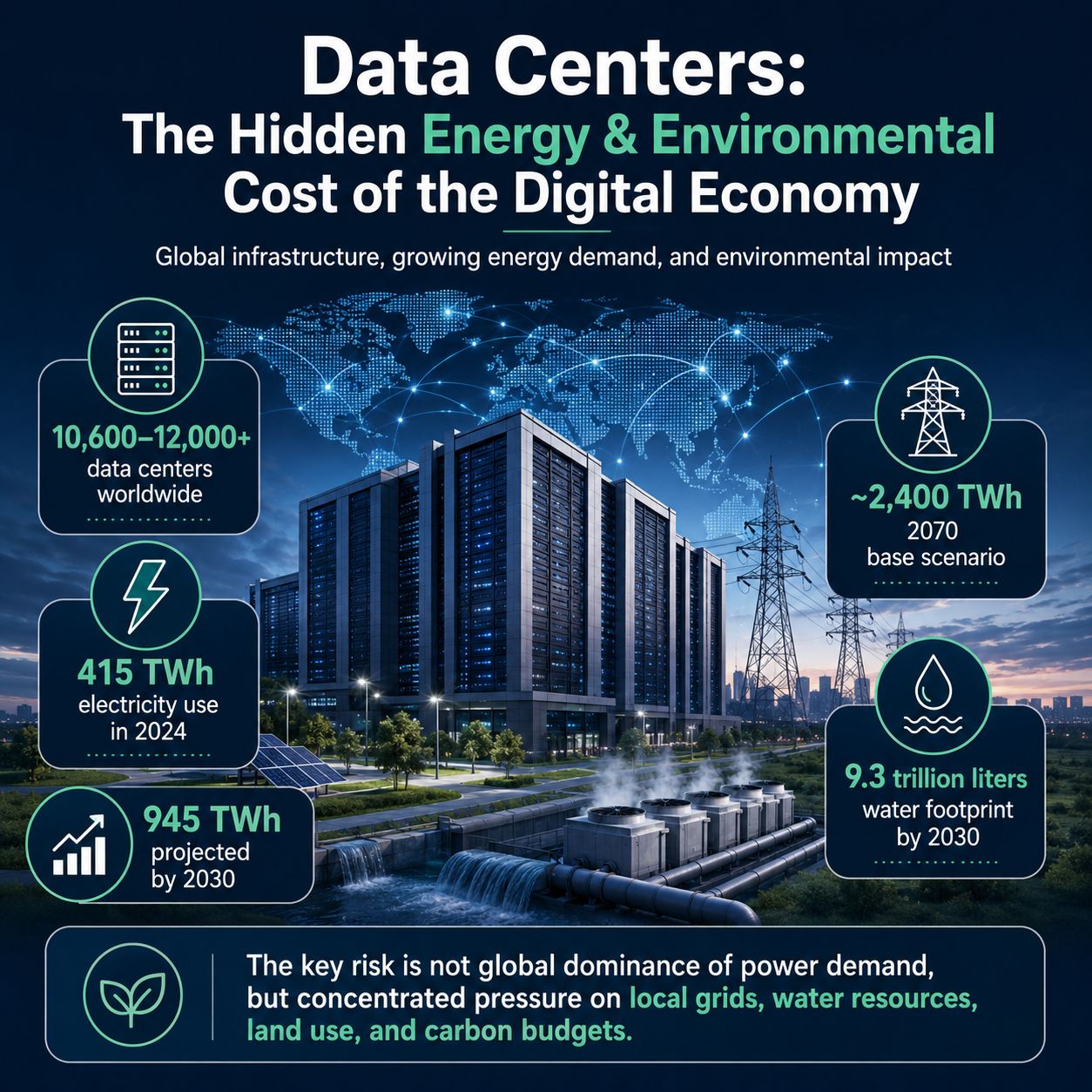
According to the International Energy Agency, data centers consumed approximately 415 TWh of electricity in 2024. This corresponds to roughly 1.5% of global electricity consumption. For 2025, the United Nations University assessment estimates consumption at 448 TWh; if treated as a country, this level of consumption would make data centers one of the world’s largest electricity consumers. [K1][K5]
The capacity of this infrastructure cannot be measured solely in megawatts or terawatt-hours. Data centers combine storage, high-speed network connectivity, uninterrupted power, cooling, backup systems, disaster recovery, GPU/TPU-based accelerated computing, and low-latency service delivery. Traditional enterprise data centers remain important; however, the center of growth is shifting toward colocation facilities, cloud service providers, and hyperscale facilities. On the artificial intelligence side, it is not training alone but the “inference” workloads serving billions of daily queries that make energy demand persistent. According to UNU-INWEH, 80–90% of AI energy use may arise from the inference process after models are deployed. [K5]
The environmental impact of data centers is not limited to electricity consumption. The issue is concentrated under four main headings:
In the short term, the most reliable reference is the IEA’s 2030 projection. Under the IEA base scenario, data center electricity consumption rises to 945 TWh in 2030; this represents more than a doubling compared with 2024 and approximately 3% of global electricity demand in 2030. The IEA expects global electricity consumption to increase from 28,200 TWh in 2025 to 33,600 TWh in 2030. [K1][K3]
For 2027, instead of a single official global forecast, applying the IEA 2024–2030 growth trajectory suggests data center consumption of approximately 630 TWh per year. This indicates that by around 2027, data centers will approach the 2% band in the global electricity system.
| Year | Data center electricity requirement | Approximate share of global electricity | Comment |
| 2024 | 415 TWh | 1.5% | Current reference level |
| 2030 | 945 TWh | ~2.8–3% | Scale close to or above Japan’s current annual consumption |
| 2070 base | ~2,400 TWh | ~3.5% | Long-term base scenario used in this article |
| 2070 stress | ~6,600 TWh | ~9–10% | Extreme scenario in which efficiency gains are absorbed by the rebound effect |
The 2070 projection is naturally not an official forecast; it is a stress test based on explicit assumptions. In the base scenario, it is assumed that after 2035 data center electricity demand grows at an average annual rate of around 2%, while global electricity demand expands with electrification to approximately 68,000–70,000 TWh by 2070. Under this assumption, data centers consume 2,400 TWh per year of electricity in 2070. This level is about 2.5 times the data center demand projected for 2030 and approximately 6.7 times Türkiye’s total electricity consumption in 2025. [K3][K6]
In the high scenario, the 2070 requirement approaches 4,000 TWh per year; this corresponds to approximately 11 times Türkiye’s 2025 electricity consumption. In the extreme stress scenario, consumption of 6,600 TWh per year could approach 10% of global electricity. The main risk is not that “most of the world’s energy will be diverted to data centers,” but that data centers will create disproportionate pressure in specific cities, regions, and grid nodes.
At the global level, it is theoretically possible to generate enough electricity to meet data center demand through 2030. According to the IEA, renewables can supply roughly half of the increase in data center electricity demand by 2030; however, natural gas and coal will continue to support a significant share of demand. Therefore, the issue is not merely “is there enough electricity?” but rather “can this electricity be low-carbon, continuous, grid-connectable, and supplied without creating local water or land pressure?” [K2]
On the path to 2070, a sustainable roadmap depends on a combination of renewable energy, batteries and long-duration storage, continuous low-carbon sources such as nuclear/SMRs, waste heat utilization, water-efficient cooling, regional capacity planning, and mandatory environmental reporting. The European Commission’s focus on energy performance and environmental reporting obligations for data centers shows that the sector is no longer only a technology issue; it is also an energy and environmental policy issue. [K4]
Because there is no single official registry that provides the exact number of data centers worldwide, the total count is tracked through sectoral databases. Current databases indicate that, as of late 2025 to early 2026, there are approximately 10,600–12,000+ operational data centers globally. This infrastructure is geographically highly concentrated: the United States ranks first by a wide margin with approximately 5,427 facilities, followed by Germany, the United Kingdom, China, Canada, France, Australia, the Netherlands, Russia, and Japan. At the regional level, North America hosts approximately 5,700+ data centers, Europe 3,300+, and Asia-Pacific 1,800+. [K7] The natural resource requirement arises less from fuel burned directly inside data centers and more from the generation mix of the electricity supplied to these facilities: according to the IEA, approximately 460 TWh of electricity was generated to supply data centers in 2024; around 30% of this came from coal, 26% from natural gas, 27% from renewables, and 15% from nuclear. [K2] When this physical resource mix is translated using the EIA’s average electricity generation coefficients, today’s data center ecosystem corresponds to approximately 71 million tons of coal and 25 billion m³ of natural gas equivalent in fossil fuel consumption; the water footprint, back-scaled from the 9.3 trillion liter value projected for 2030 based on electricity demand, is approximately 4 trillion liters per year. [K5][K8] In 2030, electricity generation required for data centers is expected to exceed 1,000 TWh; if today’s fossil intensity remains unchanged, this would imply approximately 155 million tons of coal, 55 billion m³ of natural gas, and a water footprint of 9.3 trillion liters per year. In the 2070 base scenario, when annual data center electricity demand reaches 2,400 TWh, the corresponding fossil burden would be approximately 372 million tons of coal and 131 billion m³ of natural gas if today’s resource mix is maintained; however, even under a more realistic low-carbon transition scenario in which the fossil share falls to 15%, the system may still require fossil resources equivalent to approximately 87 million tons of coal and 40 billion m³ of natural gas. Therefore, the long-term risk is not only “fuel availability,” but whether continuous low-carbon electricity, grid connection, water-efficient cooling, site selection, and local ecosystem carrying capacity can be managed simultaneously.
Data centers are indispensable infrastructure for the modern economy; however, growth becomes unsustainable when their environmental cost remains “invisible.” Data center electricity consumption is expected to rise to approximately 945 TWh by 2030. In the 2070 base scenario, this requirement could reach 2,400 TWh per year. This is not a share large enough to capture the global electricity system on its own, but it is large enough to exert decisive pressure on local grids, water resources, land use, and the carbon budget.
For this reason, the sector’s main strategy should not be limited to building more data centers. The right strategy is to plan computing demand together with energy, water, land, and carbon budgets; locate data centers in regions with low-carbon electricity and low water footprints; manage the hardware lifecycle; and apply demand discipline alongside efficiency in AI use. The sustainability of the digital economy will depend less on how much data centers grow and more on which resources, and within which environmental limits, this growth is managed.
TUYAD closely monitors developments related to the growing energy demand of data centers, their environmental impacts, and the sustainability of digital infrastructure. While the Association continues its efforts to provide industry stakeholders with up-to-date reports, technical insights, and sectoral assessments, Hayrettin ÖZAYDIN – President of TUYAD drew attention to the rapid increase in global energy demand, stating that in long-term scenarios, the energy pressure created by data centers and digital infrastructure may become more pronounced. He also noted that, unless the necessary planning is carried out, regional risks may emerge in terms of energy supply and grid capacity. In this context, TUYAD emphasizes that the sector must act not only in response to today’s requirements, but also with sensitivity to the future limits of energy, water, land use, and carbon budgets. The Association further underlines the critical importance of developing environmentally responsible, efficient, and long-term policies to ensure that digital transformation advances on a sustainable foundation.
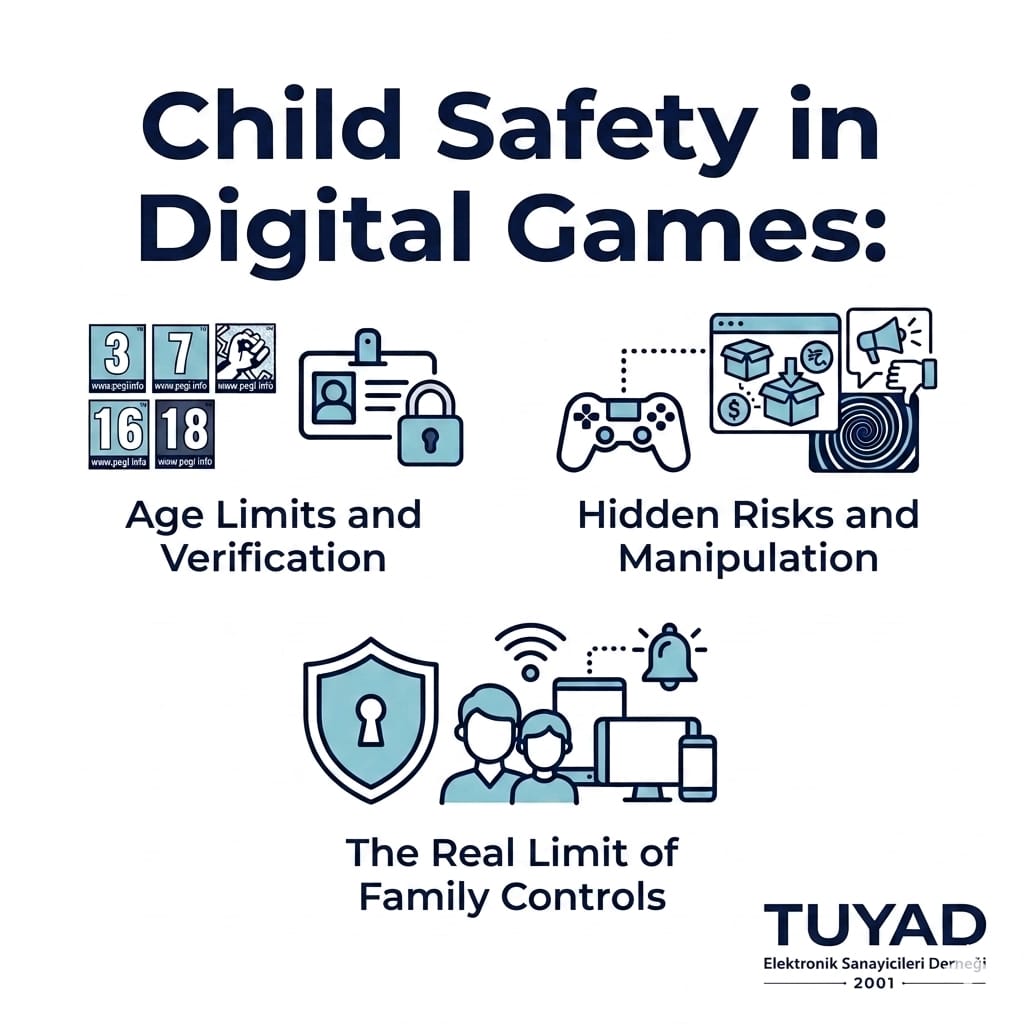
Child Safety in Digital Games: Age Limits, Hidden Risks, and the Real Limits of Family Control
Digital games are no longer just entertainment products; they are a large digital ecosystem where children socialize, spend money, build identities, and sometimes become open to manipulation. Mobile games, computer and console games, and multiplayer productions played over the internet have turned into a global industry reaching billions of users. According to Newzoo’s 2025 data, the global gaming market has reached a revenue of 188.8 billion dollars and approximately 3.6 billion players; about 55 percent of the revenue comes from mobile games. In the same report, the number of mobile players is estimated at approximately 3 billion, PC players at 936 million, and console players at 645 million.
The situation is also striking in terms of Turkey. According to TÜİK’s “Survey on the Use of Information Technologies by Children 2024,” the rate of children who state that they play digital games is 74 percent. This rate shows that the issue of gaming should be addressed not only as a “leisure habit,” but together with topics such as child safety, consumer rights, data privacy, and mental health.
When popular games are examined, productions where children and young people are intensely present include Fortnite, Minecraft, Roblox, Counter-Strike 2, League of Legends, Valorant, EA Sports FC, PUBG, Royal Match, Pokémon GO, Coin Master and similar games. In Newzoo’s 2026 ranking of monthly active PC users, Counter-Strike 2, Minecraft, Roblox, Fortnite and League of Legends are at the top, while on the mobile side games such as Pokémon GO, Royal Match, Coin Master and PUBG are in strong positions in different revenue categories.
How Valid Are Age Restrictions?
When it comes to age restrictions in games, the best-known systems are PEGI, based in Europe, ESRB, based in the USA, and the IARC system used in digital stores. PEGI indicates the suitability of content to age with labels such as 3, 7, 12, 16 and 18; it also uses warnings such as violence, fear, bad language, gambling, online interaction and in-game purchases. ESRB, in addition to classifications such as “Everyone,” “Teen,” “Mature 17+,” provides interaction warnings such as “in-game purchases,” “users interact,” and “shares location.” IARC is an automatic age rating infrastructure used globally for digital games and applications.
However, the critical problem here is this: age labeling and age verification are not the same thing. A game being PEGI 12 or ESRB Teen does not mean that a child cannot access that game. If the child uses an adult account, enters the date of birth incorrectly, has a family payment card registered, or platform settings are not configured correctly, the age label often remains only as an informative warning. For this reason, the real effect of age restrictions depends on the control mechanism established together by the game company, application store, device manufacturer and the family.
How Are Children Manipulated in Games?
One of the most common manipulation methods directed at children is that in-game economies obscure the feeling of real money. Virtual currencies, diamonds, tokens, chests, costumes and temporary campaigns abstract the money spent by the child. Messages such as “only today,” “last chance,” “special package,” “your friends bought it,” “don’t fall behind your team” trigger the feelings of scarcity, belonging and competition.
Another risk area is loot boxes, that is, random reward boxes and chance-based digital rewards. The child spends money without knowing what they will receive; this structure can create psychologically gambling-like expectation loops. In the European Parliament’s 2025 evaluations regarding children’s online safety, loot boxes, dark design patterns, addictive design and commercial manipulations directed at children are listed among special risk areas.
Dark design patterns are not seen only on purchase screens. Daily login rewards, pressure not to break streaks, limited-time events, “battle pass” systems, infinite scrolling logic, automatic matchmaking, continuous notifications and fear of social exclusion are also used to keep children in the game longer. A 2025 academic study has revealed that interface manipulations are widespread in popular free children’s applications and that on average more than one deceptive design pattern exists in applications.
Financial and Psychological Harms
The most visible examples of financial harms are unauthorized in-game purchases, accidental expenditures and the child’s inability to comprehend the difference between virtual money and real money. The U.S. Federal Trade Commission’s Epic Games/Fortnite file is striking in this regard: Epic Games accepted a settlement of 520 million dollars due to allegations related to children’s privacy and dark design patterns; 245 million dollars of this amount was allocated to consumer refunds due to misleading payment designs. The FTC announced in 2025 that the total of refund payments to Fortnite players approached approximately 200 million dollars.
Psychological harms are more complex. In the World Health Organization’s ICD-11 classification, “gaming disorder” is defined with symptoms such as loss of control over gaming, giving more priority to gaming than other activities, and continuing despite negative consequences; for diagnosis, significant functional loss and continuity are generally required. This does not mean that every child who plays a lot of games is addicted; however, if school success, sleep, family relationships, physical activity and social life are deteriorating, the risk should be taken seriously.
Social risks in online games are also large. Voice chat, written messaging, private room invitations, user-generated content and interaction with strangers increase the risks of cyberbullying, inappropriate language, fraud, harassment and grooming. In Ofcom’s 2025 report on children and parent media use, it is stated that a significant portion of children aged 8–17 have been exposed to offensive or harmful behaviors through online games.
Where Does the System Fail?
Some of the gaps originate from game companies. Many games, despite knowing the presence of child players, establish their revenue model on in-game purchases, random rewards, aggressive notifications, social pressure and continuous event cycles. Age control mostly relies on user declaration. Spending limits, chat safety, advertisement distinction, data collection and matching algorithms are not sufficiently transparent for most users.
The second gap is in game stores and device ecosystems. Although Apple, Google, Xbox and PlayStation offer parental control tools, these remain ineffective when not set correctly. Apple can link children’s purchase and download requests to parental approval with “Ask to Buy.” Google Play parental controls provide restrictions on content downloads and purchases; however, Google states that purchase approvals are only valid through the Google Play billing system. Xbox Family Settings offer time and content management on console and Windows, while there are cases where settings do not cover mobile games. PlayStation family management provides controls such as chat, user-generated content and monthly spending limits.
The third gap is fragmented control on the family side. The child may use different accounts on phone, tablet, console and computer. Even if the parent restricts only device time, in-game chat, spending, adding friends, watching live streams or communication on side platforms such as Discord may continue. For this reason, “screen time” alone is not a sufficient security criterion.
What Should Be Done?
From the sector perspective, the priority should be to make child accounts safe by default. Private messaging should be closed for children, spending limits should start from zero, loot box and random reward mechanics should be disabled in child accounts, advertisements should be separated by age, data collection should be minimized and algorithms should be opened to independent audit. The European Union’s Digital Services Act guidelines for 2025 also emphasize that privacy should be high by default, the impact of recommendation systems on children, blocking/muting tools and measures against harmful commercial practices should be taken.
From the family perspective, the basic approach should be to configure before banning. The child should not be given an adult account; a child account should be opened on every platform, age should be entered correctly, purchase approval should be activated, registered cards should be limited, voice chat and receiving messages from strangers should be turned off, in-game spending limits should be set, PEGI/ESRB warnings should be read and the game should be experienced together. Most importantly, children should be given digital awareness with questions such as “why does this game call you back every day?”, “why is this package limited?”, “do you really know what will come out of this box?”
As a result, digital games are not harmful on their own; in fact, when chosen correctly, they can be valuable in terms of problem solving, coordination, socialization and creativity. The problem is that children are placed into an economy of money, data and attention designed for adults without sufficient protection. A safe gaming ecosystem is the shared responsibility not only of families but also of game companies, platforms, device manufacturers, regulatory institutions and the education system.
In this context, TUYAD holds an important position as one of the sector representatives that closely follows developments in digital games, broadcasting technologies, mobile and online platforms and end-user safety. TUYAD President Hayrettin Özaydın follows current studies regarding risks that children may encounter in digital environments, age restriction applications, family control systems and technological security solutions; he continues his contacts with relevant stakeholders and awareness activities for the sector to develop in a more conscious, safe and sustainable manner. TUYAD – Association of Telecommunications, Satellite and Electronics Industrialists and Businesspeople – continues to contribute to studies that will shed light on the future of the sector by emphasizing that the opportunities provided by technology should be handled together with user rights, child safety and social responsibility principles.
OTT Platforms in Turkey: The New Broadcasting Economy Transforming Viewing Habits
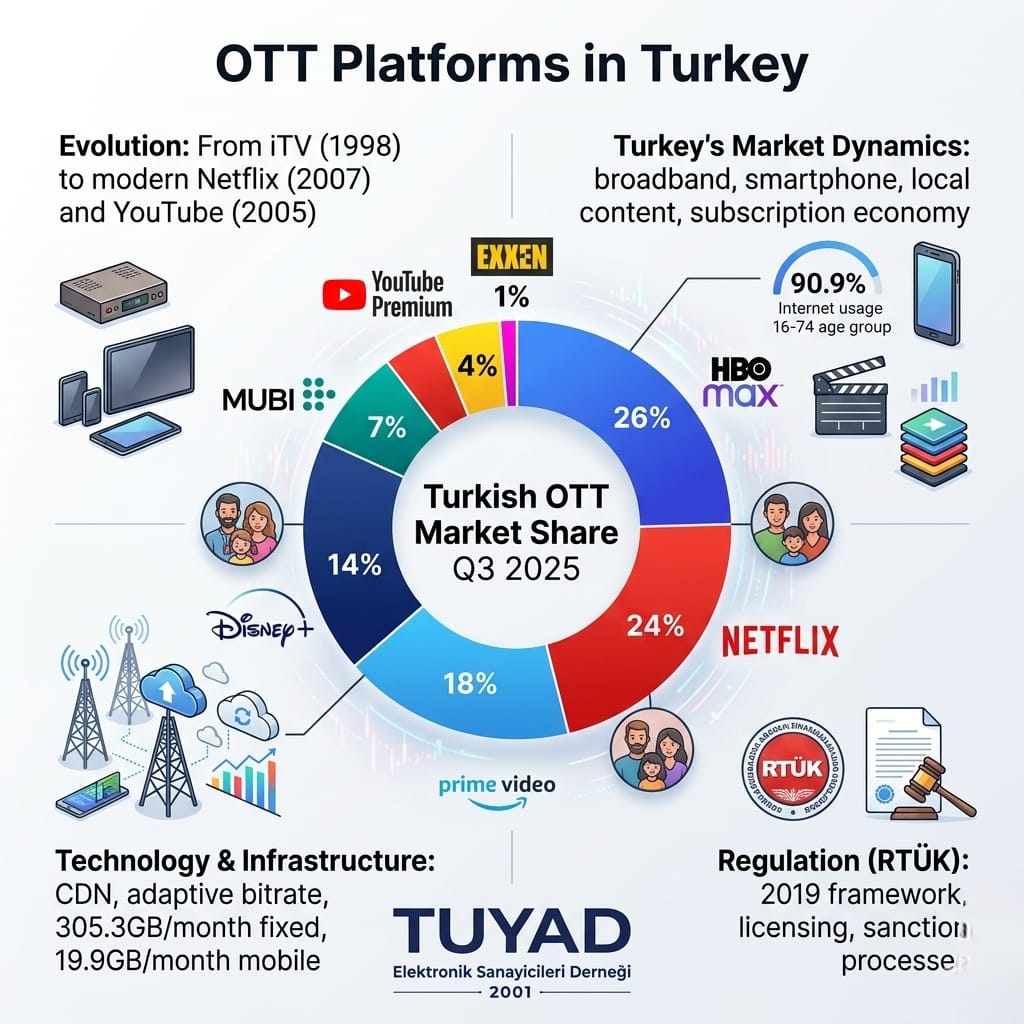
OTT comes from the English term “Over-the-Top” and refers to the delivery of video, audio, or media content directly to users over the internet, instead of through traditional terrestrial broadcasting, cable, satellite, or IPTV distribution models. In other words, OTT allows viewers to watch content whenever they want, on smart TVs, phones, tablets, computers, or gaming consoles, without being tied to a television schedule. The emergence of this model is driven by users’ demand for “on-demand, less ad exposure, personalized, and multi-device” content consumption. One of the early examples of OTT was iTV, a video-on-demand service launched by Hong Kong Telecom in 1998; the modern global breakthrough accelerated with YouTube popularizing video sharing in 2005 and Netflix launching its streaming service in 2007.
The growth of OTT in Turkey is closely linked to the widespread adoption of broadband internet, smartphone penetration, local content production, and the development of the subscription economy. According to TÜİK’s 2025 Household Information Technologies Usage Survey, internet usage among the 16–74 age group has reached 90.9%. This indicates that OTT services are no longer niche but have become a mainstream media consumption channel.
On the infrastructure side, official statistics from BTK for the third quarter of 2025 show that Turkey has 98.24 million total broadband subscribers, 76.52 million mobile internet subscribers, and 9.29 million fiber subscribers. During the same period, total broadband internet traffic reached 23.21 million terabytes, with average monthly data usage per subscriber at 305.3 GB for fixed and 19.9 GB for mobile. These figures demonstrate that video consumption has become one of the most critical loads on telecom infrastructure.
From a regulatory perspective, internet-based radio, television, and on-demand broadcasting services in Turkey are subject to RTÜK regulations. The internet broadcasting regulation enacted in 2019 introduced frameworks such as internet broadcasting licenses, on-demand broadcasting service licenses, and transmission authorizations. It also specifies that licenses are granted for ten years and outlines application and sanction processes for unlicensed broadcasting.
Major OTT platforms in the Turkish market include Netflix, HBO Max, Prime Video, Disney+, MUBI, Exxen, Gain, TV+, Tivibu Go, and TRT’s platform tabii. Netflix strengthened its localization in Turkey in 2016 by offering Turkish language support and payment in Turkish Lira. Disney+ launched in Turkey on June 14, 2022. Exxen started on January 1, 2021, and TRT’s international digital platform tabii was introduced on May 7, 2023.
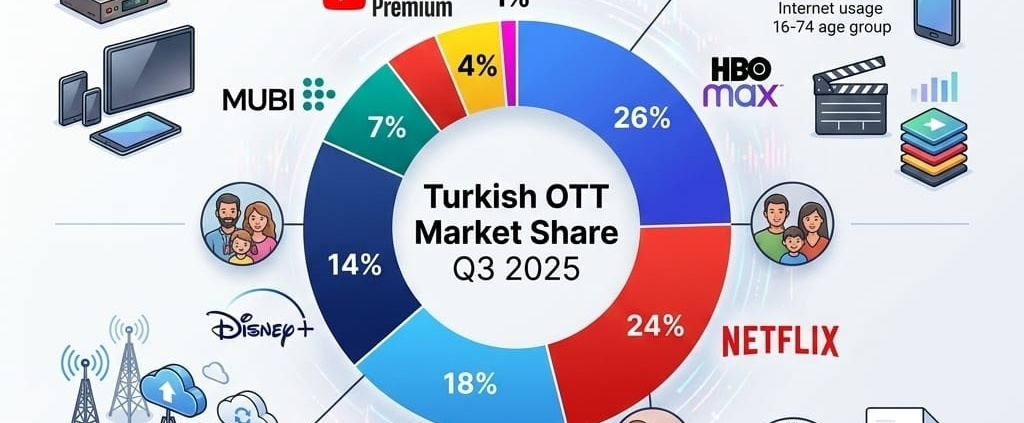
As of 2025, significant changes have occurred in market competition. With BluTV’s transformation into the Max/HBO Max structure, global catalogs, local content, and bundle partnerships have been consolidated under one roof. According to JustWatch data for Q3 2025, HBO Max leads with 26%, followed by Netflix at 24%, Prime Video at 18%, and Disney+ at 14%. MUBI holds 7%, YouTube Premium 4%, and Exxen 1%. This landscape indicates that Turkey has shifted from single-platform dominance to a “multi-subscription” and “content-driven platform choice” era.
Technologically, OTT platforms rely on several core components: CDN (content delivery networks), adaptive bitrate streaming, cloud-based scaling, recommendation algorithms based on user behavior, digital rights management, multi-profile structures, and offline viewing. For end users, these mean less buffering, automatic quality adjustment based on internet speed, personalized recommendations, and continuity across devices. For the industry, data has become as strategic as content itself—metrics such as how much content is watched, where viewers drop off, and which genres retain subscribers directly influence investment decisions.
In the coming period, three dynamics will shape Turkey’s OTT market: price sensitivity, the strength of local content, and sports/live broadcasting rights. On the user side, as subscription costs rise, models such as seasonal memberships, family packages, ad-supported lower-cost plans, and operator bundles will gain importance. On the industry side, local series, documentaries, children’s content, and sports rights will become key differentiation factors. Therefore, OTT is not just about watching series and movies over the internet; it is a next-generation broadcasting ecosystem that simultaneously impacts telecommunications, media, advertising, data analytics, and cultural exports.
Association of Telecommunications, Satellite and Electronics Industrialists and Businesspeople (TUYAD), which brings together companies operating in satellite communication, television broadcasting, electronic communication systems, and information technologies in Turkey, is an important sectoral organization closely monitoring the transformation in OTT and internet-based broadcasting. Under the leadership of Chairman Hayrettin Özaydın, the association follows developments in satellite, IPTV, digital broadcasting, next-generation communication infrastructures, and sectoral regulations, strengthens collaboration among stakeholders, and continues its efforts to support the sustainable development of broadcasting technologies in Turkey. In this respect, TUYAD plays a key institutional role in contributing to a more high-quality, reliable, and accessible digital broadcasting environment for both industry professionals and end users.

Vertical Series: The New Series Format of Mobile Phones
“Vertical series” refers to a new generation of scripted series format designed specifically for smartphone screens. Globally, it is also known as micro-drama, short drama, vertical drama, or by its Chinese name duanju. Its main distinction is not merely its short duration; rather, the content is produced from the outset with a 9:16 vertical screen format, fast-paced editing, cliffhangers, micro-payments, and algorithm-driven recommendations in mind. Episodes are typically around one minute long, each ending with a strong “hook” that leads viewers to the next episode. According to WIRED, these productions resemble low-budget feature films; however, they are shot vertically, divided into one-minute segments, and almost every episode ends with a cliffhanger.
The commercial origin of the format lies in China. Micro-series known as “duanju” began appearing around 2018 on short video platforms like Douyin and evolved into a full-fledged industry during the pandemic. Three key needs drove this rise: users consuming content in short breaks while holding their phones vertically, a shift toward fragmented viewing habits compared to long-form series and films, and a content model that is faster, cheaper, and more measurable than traditional television for producers.
Data shows that this format is not just a temporary social media trend. According to the 55th report by the China Internet Network Information Center, as of December 2024, there were 662 million micro-series viewers in China—equivalent to 59.7% of the country’s internet users. The same report states that there are 1.04 billion short video users and 1.105 billion mobile internet users in China, with 99.7% of internet users accessing the internet via mobile phones. This clearly explains why vertical series first scaled in China: a massive mobile user base, strong short video habits, and a mature digital payment culture.
In the global market, the most notable platforms include ReelShort, DramaBox, GoodShort, DramaWave, NetShort, FlickReels, ShortMax, FlexTV, and in some markets, Kuku TV. According to Sensor Tower’s 2025 report, global in-app revenue from short drama applications increased from $178 million in Q1 2024 to approximately $700 million in Q1 2025. During the same period, global downloads exceeded 370 million, with cumulative downloads reaching around 950 million. In Q1 2025, ReelShort and DramaBox led in revenue, earning approximately $130 million and $120 million respectively.
The business model differs from traditional subscription-based streaming. Many apps offer the first few episodes for free, then continue with tokens, weekly subscriptions, ad-based unlocking, or pay-per-episode models. ReelShort describes itself on the App Store as a service offering “exclusive vertical TV mini-series” with one-minute episodes for easy mobile viewing. Similarly, DramaBox emphasizes “bite-sized entertainment,” exclusive short videos, a frequently updated library, and the ability to watch anywhere on its Google Play page.
From an industry perspective, the most important innovation of vertical series is the acceleration of the production cycle. According to Reuters, micro-drama budgets in China range from approximately $28,000 to $280,000. Vertical shooting and social media distribution significantly reduce costs. While distribution and feedback for traditional TV series or films can take years, feedback in micro-drama production is gathered much more quickly, and new content decisions are shaped directly by viewing data.
For end users, the appeal of the format is clear: it provides quick dramatic satisfaction during commutes, lunch breaks, or before sleep. However, this also creates risks. When cliffhangers, micro-payments, and autoplay combine, users may unknowingly spend significant amounts. As a result, subscription conditions, token pricing, age restrictions for children, and data privacy are becoming more prominent discussion topics.
Technologically, vertical series are not merely “TV shows adapted for phones.” This format operates alongside mobile CDN distribution, adaptive bitrate streaming, personalized recommendation algorithms, multilingual subtitles/dubbing, rapid localization, performance analytics, and A/B testing. According to WIRED, the industry incorporates highly detailed user data—such as where viewers drop off or when they convert to paid subscriptions—into production decisions. Quibi’s “Turnstyle” technology in 2020 aimed to allow both vertical and horizontal viewing of the same scene; however, today’s vertical series wave has grown in a very different way, driven by social video habits and micro-payment economics.
Today, the vertical series market does not replace long-form streaming like Netflix but rather creates a parallel layer of content consumption. Hollywood’s growing interest is notable: Peacock licensing micro-dramas from ReelShort and planning Bravo-branded original micro-dramas shows that vertical formats are no longer a niche market limited to Asia.
In Turkey, vertical series are still in an early stage; however, they hold strong potential due to high mobile video consumption, widespread social media habits, and the strong storytelling capacity of the Turkish TV industry. With proper positioning, high-quality scripts, transparent payment models, and culturally relevant genres, vertical series could become a low-cost testing ground for producers, a storytelling-based advertising channel for brands, and a new form of entertainment offering intense emotional experiences in a short time.
Conclusion: Vertical series is a new media format that fills the gap between “short video” and “professional drama.” Born in China and rapidly expanding into the U.S. and other markets, it has built its own economy through data-driven production and mobile payment models. In the coming period, the winners in this field will not simply be those who produce the most content, but those who understand local culture, manage user experience transparently, and deliver compelling stories in a short time.
Closely monitoring the development of broadcasting, satellite, media technologies, and digital platform ecosystems in Turkey, TUYAD – Association of Telecommunications, Satellite and Electronics Industrialists and Businesspeople – places importance on topics such as vertical series, mobile broadcasting, and next-generation content consumption habits from an industry perspective. TUYAD President Hayrettin ÖZAYDIN follows these rapidly changing technological and commercial models worldwide, evaluating current developments, user behavior, and platform economics on behalf of the sector. TUYAD continues its efforts to ensure that the transformation in media and broadcasting is properly understood in Turkey, to prepare local producers for new opportunities, and to support the sustainable development of the industry.


DVB-T2: A Delayed Broadcasting Opportunity for Turkey
Television broadcasting is no longer just a service delivered via satellite, cable, or the internet; it is also a strategic infrastructure issue in terms of spectrum efficiency, disaster communication, domestic device ecosystems, and free access policies. At the center of this transformation lies DVB-T2, the second-generation terrestrial digital television technology. DVB-T2 provides a technical foundation for higher capacity, better coverage planning, and HD/UHD broadcasting compared to analog terrestrial broadcasting or the older DVB-T standard. The DVB Project reports that DVB standards are used across satellite, cable, terrestrial, and broadband networks, with more than 1.5 billion DVB receivers worldwide.
In Turkey, the legal and technical foundation of DVB-T2 is not new. In 2012, RTÜK announced that it had adopted MPEG-4 compression and DVB-T2 as the broadcasting standard for terrestrial digital television. It also emphasized the need to standardize receiver devices, set-top boxes, and testing/approval processes. The technical parameters referenced in Turkey’s National Terrestrial Digital Television Frequency Plan are critical for the sector: 32k transmission mode, 19/256 guard interval, 2/3 coding rate, 64-QAM modulation, PP4 pilot pattern, and approximately 27 Mbit/s channel capacity.
Despite this, Turkey still presents a market where the plan and standards are ready, but widespread consumer adoption remains limited rather than a completed mass DVB-T2 transition. TRT includes terrestrial analog and digital TV, satellite, cable, internet/IP TV, and digital TV among its platforms, and DVB-S, DVB-S2, DVB-T2, DVB-C, and DAB+ among its standards. TRT states its coverage reaches 99% of Turkey. However, there is no recent comprehensive official announcement demonstrating DVB-T2 as a strong, nationwide free-to-air platform including private broadcasters.
At this point, Turkey’s broadcasting market is growing more around satellite, cable, IPTV, and OTT rather than DVB-T2. According to Türksat data based on BTK’s Q3 2025 report, total cable TV subscribers reached 1,535,742, with 1,238,189 digital cable TV subscribers. The same report notes approximately 1.1 million IPTV subscribers for TTNet and 1.4 million for Superonline. Fiber indicators compiled from BTK data for the end of 2025 show total fiber subscribers reaching 9,845,226 and fiber cable length reaching 680,524 km. TÜİK data shows internet usage among ages 16–74 reaching 90.9%, supporting the shift from terrestrial broadcasting to IP-based platforms.
Globally, DVB-T2 remains a current and strategic technology. Official DVB implementation guidelines define DVB-T2 as a second-generation terrestrial broadcasting standard with significant advantages over DVB-T. Many European countries use DVB-T2 as the backbone for HD and UHD transformation. Spain approved a new national digital terrestrial TV plan in March 2025, initiating a two-phase transition to expand UHD broadcasting via DVB-T2. Finland completed its transition from SD to HD broadcasting in terrestrial and cable TV in 2025, clearly requiring DVB-T2-compatible devices. In Germany, DVB-T2 HD operates as a hybrid model with free public broadcasts and subscription-based private HD channels.
The future of DVB-T2 lies not only in antenna broadcasting but also in integration with hybrid platform technologies. DVB-I enables standardized discovery of live, linear, and on-demand TV services in the internet era. HbbTV 2.0.5 enhances interactivity with DRM, WebAssembly, and DVB-I integration. On the mobile side, 5G Broadcast and multicast-broadcast services aim to deliver live content efficiently to many users, with 3GPP Release 17 defining architectural improvements.
For end users, DVB-T2 promises free, high-quality broadcasting without reliance on internet quotas or subscriptions, and resilience during disasters. For the industry, it enables more channels, HD/UHD broadcasting, regional content, emergency alerts, and hybrid advertising models. The key question for Turkey is no longer whether DVB-T2 is necessary, but how it will be positioned alongside satellite, cable, IPTV, OTT, HbbTV, DVB-I, and 5G Broadcast.
TUYAD (Association of Telecommunications, Satellite and Electronics Industrialists and Businesspeople) is an important sector organization in Turkey. Its president, Hayrettin Özaydın, follows developments in DVB-T2, satellite broadcasting, IP-based platforms, hybrid TV, and digital transformation, working to strengthen knowledge sharing and technological awareness.


Smart Home and Automation Systems: A New Standard of Comfort or a New Security Domain?
Smart home and automation systems are no longer just a showcase feature of luxury residences; they are becoming an increasingly standardized layer of technology for energy management, security, elderly care, remote control, and everyday comfort. Technologies such as the Internet of Things (IoT), artificial intelligence, cloud computing, Wi-Fi, Bluetooth Low Energy, Zigbee, Z-Wave, Thread, KNX, and the recently prominent Matter standard form the backbone of a digital ecosystem that connects devices within the home. Platforms like Google Home, Amazon Alexa, Apple Home, Samsung SmartThings, and Home Assistant represent the user-facing side of this ecosystem.
Although the concept of smart homes dates back to the 1960s, home automation in its modern sense began to spread with the X10 protocol developed in 1975. X10 enabled remote control of devices via a home’s electrical wiring. After the 2000s, the sector accelerated with the decreasing cost of wireless networks, the widespread adoption of smartphones, and the growth of cloud services. Today, a smart home is not just about turning on a light via a phone; it is a digital living infrastructure that monitors energy consumption, analyzes security cameras, adjusts thermostats based on habits, and enables devices from different brands to work together. The purpose of the Matter standard is precisely to reduce this fragmented structure and ensure interoperability across brands through a single protocol.
The level of adoption has become remarkable. According to Eurostat data, 70.9% of individuals aged 16–74 in the European Union used internet-connected devices (IoT) in 2024. The highest rates were recorded in the Netherlands (94.8%), Ireland (90.6%), and Denmark (87.0%). Within the same dataset, internet-connected TVs were the most common IoT device at 57.9%, followed by wearable smart devices at 29.9%, smart speakers with virtual assistants at 16.0%, home energy management systems at 14.2%, smart household appliances at 12.8%, and smart security devices at 11.8%. In Türkiye, while TÜİK’s 2024 Household Information Technologies Usage Survey does not provide a direct smart home adoption rate, it presents a strong infrastructure indicator: 96.4% of households—and 99.2% in Istanbul—have internet access at home.
The popularity of these systems is driven not by mere technological curiosity, but by real needs. The first is security: smart cameras, doorbells, motion sensors, smoke/gas/water leak detectors, and smart locks provide users with a sense of control even when they are away. The second is energy efficiency: smart thermostats, plugs, and lighting systems can reduce consumption in unoccupied rooms. According to ENERGY STAR, certified smart thermostats can provide approximately 8% savings on heating and cooling bills, or around $50 annually. The third need is comfort and accessibility: for elderly individuals, people with disabilities, families with children, or frequent travelers, centralized control of lighting, curtains, climate systems, doors, and security systems significantly simplifies daily life.
The next phase of the sector is AI-powered automation. While older systems operated on fixed rules such as “turn on the lights at 7:00 PM,” modern systems can analyze whether the user is at home, temperature preferences, movement patterns, camera events, and voice command history to make more contextual decisions. Google clearly states that data such as motion, ambient light, temperature, humidity, and occupancy collected by Nest devices can be used to improve usefulness, performance, and reliability. Amazon defines Alexa as a “cloud-based voice service,” meaning that in many voice assistant scenarios, processing occurs not only on the device but also in the cloud.
At this point, a critical question arises: where is in-home data stored, and are daily habits being recorded? The answer varies depending on the brand and settings. Some processes can be handled locally on the device; for example, Matter-enabled devices allow lower-latency control over local networks. However, voice assistants, camera recordings, cloud backups, mobile app histories, automation scenarios, and subscription-based security services are often stored in manufacturers’ data centers. Google states that Assistant interaction data is stored on its servers (data centers), while some Nest devices can process certain data locally. Users can view and delete their past interactions. Therefore, smart home systems can generate sensitive behavioral data such as sleep patterns, presence at home, room usage, energy consumption, entry and exit times, and voice command habits.
As benefits grow, so do risks. The most common vulnerabilities include weak or default passwords, outdated device software, insufficient encryption in low-cost hardware, insecure mobile applications, third-party integrations, and lateral movement risks between devices connected to the same home network. According to a 2024 study by the U.S. Federal Trade Commission, approximately 89% of the 184 smart products examined did not clearly state how long software updates would be provided. This creates serious uncertainty for users, as devices such as cameras, locks, or plugs that no longer receive updates can become security risks over time. NIST’s NIST IR 8425 document also emphasizes that fundamental cybersecurity capabilities must be applied across the entire product lifecycle in consumer IoT devices.
Regulations have also begun to address these risks. In the United Kingdom, the Product Security and Telecommunications Infrastructure regime came into force on April 29, 2024, requiring manufacturers, importers, and distributors of consumer connected products to comply with minimum security obligations. The European Union’s Cyber Resilience Act mandates secure design, updates, and vulnerability management for products with digital elements, with major obligations planned to take effect from December 11, 2027. These developments show that the smart home sector is no longer just an electronics or decoration market, but also a cybersecurity and data governance domain.
In conclusion, when properly implemented, smart home systems are powerful technologies that simplify life, optimize energy consumption, enhance security, and provide real-time control. However, the term “smart” does not inherently mean “secure.” For end users, the best approach is to choose brands that clearly state update support, change default passwords, use two-factor authentication, regularly review camera and microphone permissions, place IoT devices on a separate guest network if possible, and disable unnecessary cloud recordings. For the industry, success will not come merely from selling more devices, but from transparent data policies, long-term software support, adherence to open standards, and a culture of secure deployment. The true value of smart homes will emerge when technology becomes invisible, but security remains visible.
In Türkiye, TUYAD — the Telecommunications Satellite and Electronic Industrialists and Business People Association — stands out as an important professional organization for monitoring sectoral developments in this field. TUYAD aims to bring together companies operating in satellite communications, broadcasting, electronic communication systems, and information technologies under one roof, fostering collaboration among stakeholders, supporting technological advancement, and contributing to a sustainable market structure. Under the leadership of Chairman Hayrettin Özaydın, innovations in smart home technologies, electronic communications, digital living, security systems, and automation are closely followed, and efforts continue to support the sector’s development by monitoring current needs, standards, and transformation trends.


We wish to sign successful projects together in the new year, filled with health, peace, and success, and hope that 2026 will bring prosperity to our country and our sector.

 LET 2021 PASS WITH HEALTH, PEACE, PEACE AND HAPPINESS FOR...December 31, 2020 - 2:58 pm
 Energy Consumption and Efficiency in Electronic DevicesMay 2, 2025 - 7:38 am
 TUYAD TAKES ITS PLACE AT BROADCAST FAIR | OCTOBER 22–...June 22, 2026 - 6:41 am
 ARABSAT VISITED TUYAD ASSOCIATION IN ISTANBUL OFFICEJune 7, 2021 - 8:04 am
 TUYAD MEETS INDUSTRY REPRESENTATIVES ON THE SECOND DAY OF...October 16, 2026 - 9:50 am
 WELCOME TO OUR FAMILY, APEPOCHOctober 8, 2026 - 12:43 pm
 A Stronger Türkiye Through Transparency, Justice and the...September 30, 2026 - 1:39 pm
 Should We Be Afraid of Artificial Intelligence?September 28, 2026 - 9:42 am