We are excited to announce that TUYAD will be participating in the CABSAT 2025 Exhibition, taking place in Dubai from May 13–15.
We invite you to visit us at our booth S1 L42, where we will be representing our industry, our association, and our members.
For more information, please contact: international@tuyad.org
Stay tuned!

NOW AVAILABLE!
Dijital Yaşam Magazine – CABSAT 2025 Special Edition is out now!

Explore Turkey’s strength in communication, broadcasting, and satellite technologies in this special issue prepared exclusively for the CABSAT Exhibition in Dubai.
Meet the industry leaders, discover innovative solutions, and get inspired by a global vision.


Click here to read the magazine.

#CABSAT2025 #DigitalLife #Broadcasting #CommunicationTechnology #TurkishInnovation


With the increase in television broadcasting services, viewers have faced difficulties keeping their set-top boxes and televisions up to date for TÜRKSAT satellites. To address this, TÜRKSAT launched a new channel update system (TKGS) in 2013. TKGS is used by many satellite receiver and Smart TV manufacturers to eliminate the challenges of standard channel search methods.

The system operates via software integrated into the device during manufacturing. For the software to be added to the product, it must meet certain standards and quality requirements.

How to Access the TKGS System?
To ensure widespread adoption of TKGS across all satellite receivers, TÜRKSAT collaborates with the Satellite Receiver Manufacturers Association (TUYAD). TÜRKSAT provides this service free of charge to satellite receiver manufacturers.

TÜRKSAT supplies the required data for TKGS, eliminating the need for each company to generate and broadcast its own data.
Although some satellite receivers currently offer update support, with the expansion of TKGS, this service will become standardized and continuously available. As a result, all satellite receiver and Smart TV users in Turkey will receive real-time updates on frequency changes of channels broadcasting via our satellites.

The additional capacity provided by the TURKSAT 4A communications satellite operating at 42° East has increased the number of TV and radio broadcasts and enabled more TV channels to offer their HD versions via TÜRKSAT satellites. Moreover, new channels are continuously being added to our channel list.

With the new software updates, the latest channel lists can be installed, allowing end-users to watch or listen to new channels without taking any action.

The latest update was made on December 16, 2024, and the channel lists were updated with the new software.
All encrypted and free-to-air channels broadcasting via TÜRKSAT satellites are transmitted through TÜRKSAT’s four different communication satellites. No additional antenna is required to view these broadcasts. Channels on all unidirectional satellites are updated simultaneously.

While the frequencies of channels on TÜRKSAT satellites occasionally change, no modifications to existing antenna settings are necessary.
With correctly configured frequency settings, satellite receivers can receive high-quality broadcasts from TÜRKSAT satellites.

How to Configure Current and New Frequency Settings on TÜRKSAT Satellites?
For satellite receivers compatible with the TÜRKSAT Channel Update System (TKGS), no configuration is necessary — receivers and televisions automatically update to new frequencies.

Satellite receivers that are not compatible with TKGS must have their frequency settings configured and network scanning performed. For devices without TKGS software approval, manual adjustments must be made. These settings must be completed either by the end-user or service personnel.

Detailed information on installation and setup can be found at TÜRKSAT’s official page: https://uydu.turksat.com.tr/tr/kilavuzlar/canak-anten-ve-uydu-alicisi-kurulumu

Below is the list of TKGS-approved software and certified brands for your reference. Devices claimed to have TKGS approval but not included in this list do not possess officially certified software or updates.

TKGS Approved Brands tıklayınız

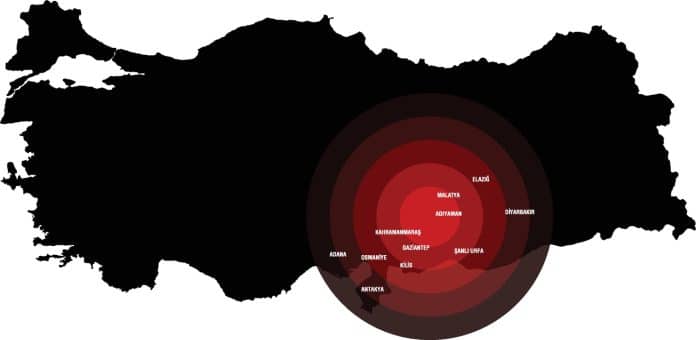
Communication is crucial during an earthquake, and the ability to transmit communication without cables can only be achieved through satellite technologies. The VSAT (Very Small Aperture Terminal) system, which provides continuous broadband satellite internet service, refers to small (80 cm) antenna-based satellite ground stations. VSAT is a system that enables two-way satellite internet communication between geographically distant locations through a “central ground station” (Hub station).

TUYAD’s Role in Disaster Situations

TUYAD provides training for the installation and activation of these systems during AFED (Acil Felaket ve Afet Durumu – Emergency Disaster and Emergency Situation), storing the details of trained individuals in a CRM system, and calling on these individuals for duty when needed.

VSAT systems play a crucial role in communication during disaster recovery and emergency response. Given that it is impossible to predict when and where an earthquake or disaster will occur, most of the time, these events quickly disable infrastructure. Those living in the affected area, as well as those wishing to provide assistance, will turn to mobile devices for communication. However, when infrastructure is damaged, communication becomes impossible.

In these situations, VSAT technology is the key to maintaining communication. Satellites serving the region are critical here. For Turkey, TÜRKSAT and Eutelsat satellites are among the easiest sources of VSAT services.

TÜRKSAT KU and KA band VSAT systems keep a sufficient stock of terminals for emergency communications during disasters. These terminals are deployed by volunteer installation teams, ready to be activated across Turkey.

The Importance of Quick Communication Setup During Emergencies

In a disaster scenario, the ability to establish connections as quickly as possible is truly a matter of life and death. Ensuring that disaster response teams and the general public can quickly establish communication is vital.

VSAT installation training is offered by TUYAD to anyone across Turkey who wishes to participate. Since it is impossible to predict when and where an earthquake will occur, all trained individuals are called to duty during such events. This work is carried out on a voluntary basis, and we extend our gratitude to all the volunteers who have contributed to communication services during emergencies.

The installation of these systems is critical for establishing communication in places where help is needed, both during and before/after the rescue efforts.

The Need for Assistance in the Field During a Disaster

In disaster situations, field teams will constantly need additional personnel. Furthermore, the accessibility of these teams is of great importance. In such cases, priority should be given to VSAT installation teams.

The role of VSAT terminals in emergency communication during disasters became crystal clear during the most recent earthquake. The activation of these systems, through TUYAD’s VSAT group integration, and the rapid deployment of registered personnel in the affected regions enabled communication to be re-established.

Communication Saves Lives

During an earthquake, communication is the most important factor in saving lives. VSAT is the only means of establishing communication in an affected region where the infrastructure has been damaged.

VSAT installation teams may have to travel long distances and face challenging conditions to reach the disaster zone, carrying sensitive equipment. Upon arrival, they work to set up and activate the equipment, often without any prior communication infrastructure in place.

VSAT deployment teams, having received specialized training, require only electrical power (typically supplied by generators) to operate. By racing against time, they install the VSAT antenna, make the necessary precise adjustments, and quickly connect to the internet, making a significant impact on disaster recovery efforts.

The Importance of Training and Certification

During a disaster, all satellite operators reserve their entire capacity for use in the affected regions. Equipment is stocked, but the critical aspect is the installation and activation process, which is only possible with trained human resources. We would like to extend our heartfelt thanks to all VSAT installers for their dedication during disaster situations.

TUYAD’s free volunteer installation training programs and the certification obtained afterward provide participants with valuable knowledge and skills about satellite operations and equipment. This not only makes them experts in satellite communication during emergencies but also prepares them for everyday satellite operations. In disaster recovery, the priority is always to save lives.

Conclusion and Gratitude

VSAT systems are of paramount importance for communication during earthquakes and other disasters. Rescue teams are working with incredible dedication to save people as quickly as possible from the affected areas. As TUYAD, we thank all the volunteers who contributed to emergency efforts and inform you that we will continue our volunteer installation training programs.

Introduction

Artificial intelligence (AI) is a technology that, since the mid-20th century, has been the dream of scientists and engineers, but has only gained significant momentum in the past decade. Its role is growing day by day in our daily lives, business environments, and industrial production. This article comprehensively examines the historical roots of AI, how individuals have incorporated AI technology into both their personal and professional lives, its positive and negative impacts on society and lifestyles, and how it is integrated into high-tech sectors such as electronics, communications, satellites, space, and aviation—analyzing what these applications mean for both employees and company owners.

  1. The History of AI Use and Its Place in Daily Life

Historical Development and Foundations

The origins of artificial intelligence can be traced back to the question posed by Alan Turing, “Can machines think?”, in the 1950s. The 1956 Dartmouth Conference, with contributions from pioneers such as John McCarthy, Marvin Minsky, and Claude Shannon, marked the official recognition of AI as a discipline. Although early on, limited computing power and a lack of data restricted the scope of AI applications, the development of expert systems in the 1980s led to the first practical examples in fields like finance, medicine, and engineering.

The 1990s witnessed the evolution of machine learning algorithms, and with the advent of big data, deep learning, and neural network-based methods in the late 2000s and 2010s, AI became central to both individuals’ lives and institutions.

AI Applications in Daily Life

  • Mobile Assistants and Personal Devices: Applications such as Siri, Google Assistant, and Alexa use natural language processing (NLP) and deep learning techniques to understand voice commands and meet users’ needs in managing schedules, accessing information, and automating home functions. These systems are trained using transformer architectures (e.g., BERT, GPT) and continuously improve through feedback.
  • Finance and Banking: AI is used in fraud detection, credit risk analysis, and algorithmic investment strategies by analyzing millions of transactions in real time, identifying unusual patterns, and enabling preventive measures. For instance, deep learning algorithms forecast future risks based on historical transaction data.
  • Healthcare: In areas such as medical image analysis, disease diagnosis, drug discovery, and robotic surgery, AI employs convolutional neural networks (CNNs) and other deep learning methods to detect abnormalities in images, facilitating early diagnosis and personalized treatment processes.
  • Education: Digital learning platforms tailored to an individual’s pace and style of learning offer personalized curricula through AI algorithms. These systems analyze a student’s past performance to provide targeted support in areas where improvement is needed.
  • E-commerce and Digital Marketing: AI systems that analyze user behavior offer personalized product recommendations, optimize customer service through chatbots, and dynamically adjust pricing strategies to enhance competitive strength.
  • Transportation: Autonomous vehicles, smart traffic management systems, and logistics optimization employ AI to process sensor data continuously, make real-time decisions, and improve traffic flow.
  1. The Impacts of AI on Society and Our Lifestyles

Positive Impacts

  • Efficiency and Speed: AI enables the automation of routine tasks, allowing people to focus on more creative and strategic roles. For example, businesses can make faster and more accurate decisions by analyzing big data.
  • Personalized Experiences: AI offers solutions tailored to individual needs in fields ranging from education to healthcare, thereby enhancing the quality of life.
  • Risk Management and Security: In financial transactions and cybersecurity, AI detects anomalies to minimize risks.
  • Innovation: With its capacity for continuous learning and adaptation, AI opens the door to new business models and technological advancements.

Negative Impacts

  • Workforce Transformation: Increased automation poses the risk of job loss for workers engaged in repetitive tasks, necessitating a transformation in professional skills.
  • Privacy and Ethical Issues: The extensive use of big data and the lack of transparency in algorithms can lead to data security and ethical challenges.
  • Dependency and Social Interaction: Growing reliance on digital systems may reduce face-to-face communication and social interaction.
  • Technological Inequality: Differences in access to AI technologies can lead to new forms of inequality within society.


Electronics Sector

The electronics sector spans consumer electronics, industrial automation, and semiconductor production. AI plays a pivotal role in the following areas:

  • Smart Sensors and IoT: By processing vast amounts of data from sensors in real time, devices can perceive their environment and make autonomous decisions. For instance, home automation systems integrate lighting, heating, and security functions seamlessly.
  • Manufacturing and Predictive Maintenance: In semiconductor manufacturing, machine learning models predict production line errors before they occur, preventing malfunctions and reducing costs while enhancing efficiency.
  • Design and Development: Deep learning algorithms are employed in the design of electronic circuits to generate optimal solutions, thereby accelerating simulation and modeling processes.

Communications Sector

In the communications field, some of the most striking applications of AI are real-time translation and speech recognition systems:

  • Real-Time Translation: Using natural language processing techniques and deep learning algorithms, AI can instantly translate text or spoken language from one language to another. Transformer architectures (for example, Google’s Neural Machine Translation system) capture context and nuances, resulting in more accurate translations.
  • Speech Recognition Systems: In converting speech to text, deep neural networks—particularly RNN and LSTM models—analyze sound waves. These systems can recognize various accents and speech speeds, serving a wide range of applications from call centers to virtual assistants.
  • Personalized Communication: Chatbots and virtual assistants analyze historical user data to generate customized responses, significantly enhancing the customer experience.

Satellite and Space Technologies

The satellite and space sectors utilize AI intensively in applications that require high precision and reliability:

  • Rocket Navigation and Orbit Optimization: During rocket launches and orbital insertions, real-time sensor data is analyzed by AI-based algorithms. These algorithms account for immediate environmental data, fuel consumption, aerodynamic effects, and atmospheric conditions to determine the optimal trajectory. Reinforcement learning methods, in particular, enable rockets to autonomously correct errors.
  • Satellite Data Analysis: Massive datasets obtained from satellite imagery are processed using machine learning techniques to support weather forecasting, agricultural monitoring, environmental change detection, and security applications.
  • Autonomous Spacecraft: In space exploration missions, autonomous robots and vehicles process environmental data in real time, avoiding obstacles and making efficient navigational decisions, thereby performing routine tasks without human intervention.

Aviation Sector

In the aviation sector, AI plays a critical role in both commercial and military operations:

  • Operational Optimization in Commercial Flights: Data from sensors on aircraft is continuously monitored by AI algorithms. These systems analyze engine performance, fuel consumption, and weather conditions to determine the most efficient flight paths. Additionally, predictive maintenance techniques optimize maintenance processes by detecting potential issues early.
  • Strategic Decision Support in Military Flights: In military operations, AI-based simulation and analysis tools process threats, radar data, and enemy movements in real time to provide strategic decision support to pilots. These systems are equipped with high-security standards and real-time data processing capabilities.
  • Autonomous Flight and Drone Technologies: In both commercial cargo transportation and military reconnaissance missions, autonomous flight systems enable operations without human intervention. Machine learning models analyze environmental data and make dynamic decisions, thereby enhancing flight safety.

Impact on Human Labor: Is AI Replacing the Workforce?

The rise of artificial intelligence has led to significant transformations in the labor market. While routine, repetitive, and low-skilled tasks are increasingly automated, new career paths are emerging:

  • New Professions and Skill Requirements: The demand for experts such as data analysts, AI engineers, and system overseers is growing, while jobs that rely on creativity, strategy, and interpersonal skills are becoming more valued.
  • Human-Machine Collaboration: Rather than completely replacing human decision-making, AI supports it by handling data analysis, error detection, and process optimization, complementing human expertise.
  • Education and Continuous Learning: This transformation necessitates reskilling and continuous education for the current workforce. Particularly in high-tech industries, acquiring proficiency in algorithms and data science is becoming increasingly important.

Artificial intelligence has evolved from a mid-20th-century dream into a central technology that deeply impacts individual lives, societal dynamics, and industrial processes. Daily applications—ranging from mobile assistants and financial analysis tools to healthcare diagnostic systems and educational technologies—demonstrate AI’s potential to enhance quality of life.
In high-tech sectors such as electronics, communications, satellites, space, and aviation, AI provides a wide range of applications—from real-time data processing in smart sensor systems and language processing in translation technologies to rocket navigation and autonomous spacecraft. These applications boost operational efficiency, reduce costs, and create new business models and strategic partnerships.
However, this transformational process also brings about qualitative changes in the labor market, raises ethical debates, and poses data security concerns. In the future, synergistic models that effectively integrate artificial intelligence with human expertise will be key to achieving sustainable, secure, and innovative technological transformation.


As natural disasters have become more common and intense lately, infrastructure is being damaged and new solutions are required. It is important to use existing communication tools in place. Satellite technology has many useful uses for minimizing the impact felt from these devastating events.


In order to establish communication with different regions in the same geography in the event of a disaster, uninterrupted communication to the Internet via satellite antennas, data transfer through satellite technologies, which are the common areas of use of all communication tools, can be provided from anywhere and uninterrupted technology transfer.


A continuous and uninterrupted access to the broadband internet system can be provided from anywhere in the world with satellite antennas. Satellite antennas are not just a means of watching TV.


In many parts of the world, for example in New York, people may prefer satellite internet. In 2010, there were 450 thousand satellite internet preferences in this city alone. Or, dish antennas are used to access the internet in places where cable and fiber still cannot go. Cable and fiber connection is not required to access the internet network accessed by dish antennas. Satellite internet can be preferred as an alternative to cable and fiber for individual use.


Satellite internet technology has the power to receive and send important data by simply providing energy without any hindrance when a disaster occurs.


Satellites sit securely above the earth’s atmosphere and provide communication to address wide geographical locations, there will be no obstacle in front of them to interrupt communication.


When broadband internet is reached, it will be possible to communicate information with each other in data centers, which are the common meeting place of all networks.


Instead of damaging the underground cables in an earthquake, tsunami, flood or hurricane and waiting for their repair process, emergency satellite systems will provide communication immediately.


Broadband satellite internet systems are VSAT applications. With the right planning and application, many lives and property can be saved in an emergency by communicating.


In particular, VSAT satellite systems, which are easily installed and commissioned in the event of an earthquake, will immediately transmit the status of the region or, if there is a fire, the images or the degree of coldness to the relevant people.


VSAT KA-KU band satellite internet systems allow teams to establish emergency communications even when terrestrial forms of communication are down. In addition, they are very suitable technologies for continuous communication in mining, farm or sea areas where there is only electricity and no infrastructure in the normal period.


The satellite communication system consists of two main elements, the ground station and the satellites in space. The communication between them is provided by the so-called satellite dish antennas.


The biggest advantage of satellite communication systems is that they provide simultaneous communication to many users within the global coverage area in locations where there is no terrestrial infrastructure, and they become almost the only communication source in natural disasters.


All of this demonstrates that satellite technology is a vital component of disaster relief efforts today and in the future.


Various organizations have been formed for the commissioning of this important system in the event of a disaster. Manpower and knowledgeable manpower are needed not only for the existence of the system, but also for its activation in the event of a disaster.


The address and contact information of the people who are given pre-disaster training are collected in one center or even in several centers, and this information is also available for use by international aid organizations.


In our region, TUYAD carries out these training activities and has directed previously trained VSAT installers to the region in the last earthquake. Now, by training more experts, many people who will put the systems into operation in a disaster that may occur all over Turkey have already started to be registered in the system.


NASA launched the Earth Science Disasters Program in 2006 to use its key space-based assets to save lives and property in times of crisis. They analyzed the information from his satellites.


As you can see, it is possible to monitor and study a wide variety of disasters via satellites. Governments and private companies around the world are using technology to provide targeted, efficient assistance to disaster areas. As the consequences of climate change increase, satellites, along with data-collecting analytics software, will become more effective at predicting natural events and subsequent relief efforts.


TUYAD has been a trusted name in the satellite industry for 23 years. Our non-profit organization is an association where very important brands of our country come together and organizations that have a voice in various countries of the world are members.


During a disaster, of course, experts are needed to work on the rescue of the wrecked. Health teams and fire extinguishers are also needed. Security forces are also needed. Satellite technology experts have also been included in these needs. And we will continue to support our existence in this field voluntarily.


HAYRETTİN ÖZAYDIN

CHAIRMAN OF TUYAD

“The position gap in the sector is diversifying and the gap is growing. Recruitment has already begun.”


Software Engineer…

Information Security Analyst…

Web Developer…

Data Scientist….

Cloud Expert…

Software Developer…


Our call to young people is to study in engineering.


The direction of our country and the world is clear. Telecommunication, communication and information technologies are the guarantee of our future. I invite our young people with innovative ideas to our sector in order to realize their dreams.


Don’t just be part of a business plan. If you can, establish your own business that you will direct with your ideas. We will always be your supporter.


Everything starts with an idea. We need new ideas for an invention that will make something easier, faster and more economical. These ideas will become reality with software. Start off with brand new and very possible ideas, such as how a robot vacuum can turn into a robot and a life partner in every home.


Our industry needs ten thousand software engineers today, and a hundred thousand software engineers ten years from now. The chances of young people who will work in all positions in informatics and are capable of solving complex problems are very high.


Especially software developers, with the excellent advantage of engineering, make all processes from the simplest to the most complex better and more economical. Every innovation introduced becomes a function of the whole world without recognizing the borders. Every moment of life has been informatics and technology and will continue to do so. You can see this effect even when you look around.


When you start to understand all the job positions that seem complicated to you now, you will realize that it is not so complicated. All innovations always start with needs-oriented dreams by product developers. Not inventing, just developing; to renew the invention. Trust yourself and start your dreams of improving your current social area with all the smart products you already have at hand. Set out from here and see where you will reach.


The world’s top software developers started just by playing games and had no school careers. With the innovation, they offer code components that work in all countries to the convenience of people.


Even hackers made their work legal and settled in anti-hacker positions. There are great business opportunities in our industry. Each of our companies has a software developer position gap and this gap is growing every day.


If you’re still working somewhere and you’re feeling burnt out, your age and education don’t matter. You can only work on this subject if you have the ability.


Even this has been researched. In America, 3% of self-employed people quit their current job and became a software developer. It is predicted that this ratio will continue to increase.


Being a software engineer is a great feeling in many ways, especially during this period. Not only in Turkey, but all over the world, there are many positions that are currently short of workers. You can work from home without changing country. My advice is to do your own business or continue to work in corporate companies where you can be the happiest. Recently, only in our sector, job opportunities are offered to our engineer candidates with reservations from their student years. Even this is very valuable in terms of motivation.


Of course, we also have software developers who changed jobs a lot with complaints from industry employees. The first reason is salary. Foreign exchange profitable business offers are attractive due to the fact that the current currency is melting at any time. The second is the inability to renew the technical infrastructure and the increase in difficulties, the absence of innovative ideas, monotony and most importantly the option to work remotely.


The second most needed area will be information analysts. Processing the data, determining the need, taking precautions. All will be determined by analysts. If there is no analyst, the data has no value. This job, which our companies have begun to realize, will soon become an indispensable position. Every company has to get consultancy on this issue. Otherwise, the need cannot be met and the result of the supply-demand multiplier will not be known.


We must convince our youth to notice innovations in the sector as soon as possible and how valuable their ideas are. NGOs and all public institutions should be the locomotive of the sector in this direction. We hope that the training of IT workers, whose shortage is increasing day by day, will be completed by being supported by schools and vocational trainers.


Our association TUYAD will be happy to give full support to all software developers and candidates who work, have ideas and are motivated. You can contact us to start your own business or to work in a company. Your job is ready. Our experts are waiting for you to help you.


Hayrettin ÖZAYDIN

Chairman of the Board of TUYAD

TUYAD Association members have a 10% discount for custom design and construction of
special stands at ANGACOM 2022 Fair. To benefit from advantageous prices, you can contact us via our e-mail address bilgi@tuyad.org.Angacom 2022 Ari Product Lab- TUYAD Cooperation