We Respectfully Present the 2026 TUYAD Board of Directors and Corporate Members!
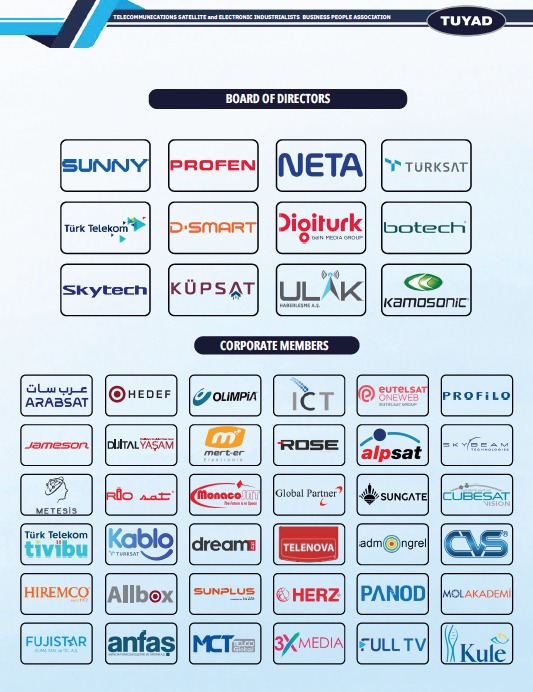


We Respectfully Present the 2026 TUYAD Board of Directors and Corporate Members!

A Bowl of Love, A Life Saved: A Call to Support Stray Animals!
With the arrival of the winter season, living conditions for our beloved friends on the streets have become more challenging than ever.
As TUYAD, with the support of our members, we aim to contribute to the feeding and shelter needs of stray animals during this difficult period.
Each member’s contribution — whether in the form of dry food, blankets, styrofoam boxes, water bowls, or similar materials — will make a meaningful difference.
The items you prepare as support will be collected from your location by our association.
A small act of kindness can bring hope to a life in need.
Join us in this act of solidarity, and together, let’s bring warmth to these cold days.
We sincerely thank you in advance for your support and sensitivity.
Respectfully,
TUYAD Board of Directors
Hayrettin Özaydın – Chairman
TUYAD Association of Telecommunication, Satellite, and Electronics Industrialists and Business People


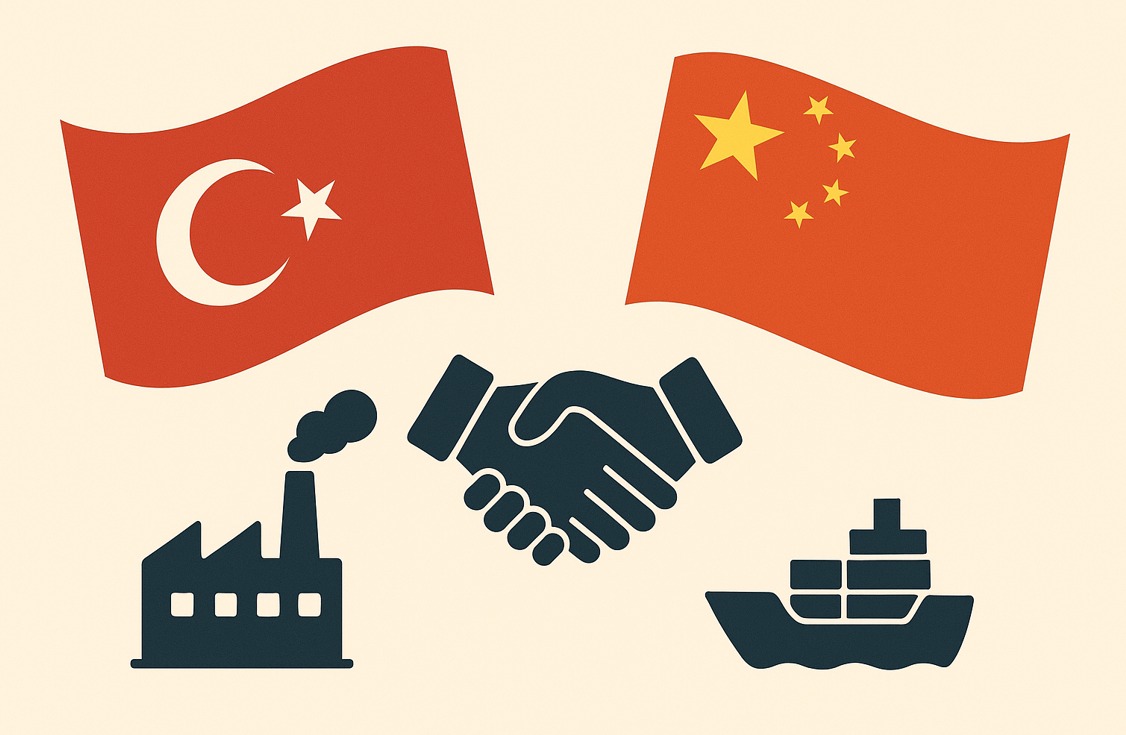
The Partnership Potential of Turkey and the People’s Republic of China
Turkey’s Customs Union Agreement with the European Union, which entered into force in 1996, has provided significant advantages to the national economy and exporting sectors. Under this agreement, industrial products exported from Turkey to European countries are exempt from customs duties. As electronic products fall under the category of industrial goods, exports of electronics from Turkey to Europe today are carried out with zero customs duties. This situation not only strengthens the competitiveness of existing manufacturers but also facilitates the access of newly established joint ventures in Turkey to the European market. Thus, it creates a strategic opportunity for both production capacity and Turkey’s international market position.
China’s position in global electronics manufacturing is well known. With its advanced technology, large-scale production capacity, and cost advantages, China has become the leader of the global electronics industry. Turkey, on the other hand, stands out with its geopolitical location, proximity to the European market, strong logistics infrastructure, and the customs duty advantages provided by the Customs Union. All these factors make strategic partnerships with China highly attractive. By combining China’s technological know-how in electronics with joint ventures established in Turkey, products can be exported to Europe with zero customs duties, which would mark a major leap in creating national added value.
The legal framework of this strategic opportunity is also clear. According to the Customs Union Agreement, industrial products, including electronics, are exempt from customs duties when exported to European Union countries. While agricultural goods and certain other sectors are excluded from this scope, duty exemptions in high-tech industries such as electronics provide Turkey with a significant competitive edge. This advantage can be further leveraged through investments made by Chinese manufacturers in Turkey. Establishing production facilities in Turkey would not only grant direct access to the European market but also create new employment opportunities for the Turkish workforce.
In addition, technology transfer is one of the most significant benefits of such partnerships. The transfer of technological advancements developed by China’s electronics industry to Turkey would strengthen domestic production capacity and, in the long run, enhance Turkey’s ability to develop its own technologies. In this way, Turkey could transform into not only a production and export hub but also a center where high value-added technologies are developed.
Within Turkey’s electrical and electronics sector, the European Union continues to be the most important export market. In 2019, the sector’s total exports reached approximately USD 11.24 billion, of which around USD 6.54 billion were directed to EU countries. This figure demonstrates Europe’s strong position in Turkey’s electronics exports and serves as an important baseline.
By 2023, about 44% of the sector’s exports—equivalent to USD 7.2 billion—were destined for EU countries. This share shows that Europe has remained both a stable and expanding market for the industry.
In the first four months of 2025, the sector’s exports totaled USD 5.38 billion. Considering that the year has not yet been completed, this significant volume highlights the sector’s potential to further strengthen its presence in the European market in the coming years.
Looking at the overall picture, it is clear that since 2019, the European Union has been an indispensable market for Turkey’s electrical and electronics exports. The data confirms both the strong historical ties and the promising growth potential for the future.
This ability is reflected in our company, Hedef Koç Consulting Company, which offers detailed consulting services for clarification and disclosure to operate in Türkiye and international markets. With solutions we offer in areas such as commercial consulting, company leasing, brand design and registration, comprehensive documentation, investments to benefit from government incentives, and market research, we aim to ensure our business partners achieve a strong and sustainable position in their target markets. You can find our company information and services at www.hedefkoc.com.
In conclusion, when Turkey’s Customs Union advantage with the European Union is combined with China’s global strength in electronics, a historic opportunity emerges for our country. If seized effectively, this opportunity could position Turkey as a regional hub in the electronics industry, increase export revenues, and directly contribute to national added value. Therefore, exporting electronics to Europe with zero customs duty through partnerships with China’s electronics industry is not only a commercial opportunity for Turkey but also a strategic development move.
Dr. Mert Özaydın / Expert Psychologist / Incentive Grant Support Expert / Expert

Your Invisible Power: Trademarks and Patents
In today’s globalized world, competition is becoming increasingly tougher. High-quality production or offering affordable prices alone is no longer enough. For businesses to differentiate themselves, secure a lasting position in the market, and maintain an international presence, intellectual property rights are of vital importance.
Trademark: The Signature of a Company
A trademark represents a company’s identity, vision, and the bond of trust it establishes with consumers. It is not just a name or a logo; behind it lies years of effort, perception of quality, and reputation.
Having a strong trademark provides:
• Customer loyalty and trust,
• Advantages when entering new markets,
• A distinctive value against competitors,
• Credibility in the eyes of investors and business partners.
Looking at the world’s most valuable companies today, it is clear that their brand values have reached billions of dollars. This demonstrates that a brand is, in fact, one of the most important but invisible assets on a company’s balance sheet.
Patent: The Guardian of Innovation
Technological advancements, innovation, and R&D investments are the cornerstones of a nation’s development. However, without patent protection, these investments can be quickly copied by competitors, rendering their value meaningless.
Owning a patent grants the inventor exclusive rights for a certain period. These rights ensure that:
• Competitors are prevented from imitation,
• Returns on R&D investments are secured,
• Technological superiority in international markets is achieved,
• Innovators and companies are encouraged.
The importance of patents is indisputable, especially in strategic industries such as telecommunications, satellite, electronics, defense, software, and biotechnology. Today, the greatest competitive advantage of developed countries lies in the strength of their patent portfolios.
The Strategic Power of Intellectual Property
Both trademarks and patents are strategic tools in the long-term growth plans of businesses. When managed correctly, they increase company value, open doors to new partnerships, and secure a strong position in international markets.
For businesses, “owning intellectual property rights” is no longer an option but a necessity. Every enterprise that acts with this awareness secures its future and sustains its competitive strength.
Contact
Saygın Patent
www.sayginpatent.com
info@sayginpatent.com
+90 (216) 338 41 09


TRT bandrol is a mandatory tax in Türkiye for certain media products and is paid by salespoints.
The Turkish Radio and Television Corporation (TRT) was established by the TRT Law enacted on May 1, 1964, and is the first and only institution in Türkiye responsible for public broadcasting.
The law regulating TRT’s revenues, Law No. 3093, was adopted on December 4, 1984. According to this, “the TRT contribution fee will be collected from the end consumer by manufacturers and importers and paid to the institution.” As proof of this payment, the bandrol stamp and the TRT bandrol label system were introduced.
What is the TRT Bandrol?
It is the physical indicator of the tax collected, based on the Law on the Revenues of the Turkish Radio and Television Corporation No. 3093, from all electronic devices that have the distinctive feature of receiving radio and TV broadcasts without the need for any additional equipment.
What is the e-Bandrol?
It is a form of bandrol purchased electronically for the same category of products, where no physical bandrol sticker is affixed, and verification is done solely through the system. On the website https://www.trt.net.tr/bandrol/, by entering the device’s serial ID number, it can be checked whether the bandrol fee has been paid.
According to Law No. 3093, it is mandatory to pay the bandrol fee and obtain a bandrol for the devices listed in this law. The current list reference: 2022/5610
Other devices capable of receiving all types of visual and/or audio broadcasts
Latest rates as of August 2025:
| HS Code | Product | TRT Rate |
| 8528 | Television | 16% |
| 8527 | Radio | 16% |
| 8521 | Video | 16% |
| 8519 | Combined devices | 16% |
| 8517 | Mobile phone | 12% |
| 8471 | Computer | 4% |
| 8701 | On-vehicle devices | 0.8% |
| 8601 | Other on-vehicle devices | 0.02% |
| 8528.71 | Set-top boxes | 12% |
| 8525 | Other, smartwatches | 14% |
Where to Obtain the Bandrol?
An authorized company representative collects the bandrol from the relevant TRT Directorate by submitting the original request petition, proof of payment, and authorization document previously sent to the institution.
Who Can Obtain the TRT Bandrol?
Manufacturers with a capacity report, and importers with customs declarations, can obtain TRT bandrols from the institution. Outside these categories, TRT bandrols cannot be obtained.
What Happens if the Bandrol Fee is Not Paid?
If a manufacturer or importer sells or offers for sale devices listed in Article 1 of the law without a bandrol or label, TRT imposes an administrative fine equal to twice the calculated bandrol fee for each unbandrolled device.
If the bandrol fee has been paid but the bandrol is not physically affixed to the product, or if in the e-Bandrol application the required notification is not made within 10 days, TRT applies a fine equal to twice the bandrol fee. After obtaining the bandrol, details such as place of use, quantity, brand, and model must be reported to the institution within 10 days.
When Should the TRT Bandrol Be Obtained?
According to Article 3 of Law No. 3093: “Manufacturers of devices listed in Article 1 must obtain the bandrol or label before sale; importers must obtain it upon entry into free circulation.”
How is the Declared Sales Amount Determined for TRT Bandrol Purchase?
For imports, it is the customs declaration value excluding Special Consumption Tax (SCT) and VAT. For manufacturing, it is the sales invoice value excluding SCT and VAT. For manufactured products, it is calculated and collected based on the production cost stated on the first invoice.
Who is Responsible for Paying the TRT Bandrol Fee?
The law requires manufacturers and importers of the devices listed in Article 1 to declare and pay the collected fees to TRT by the 10th of the following month. Initially, this was collected from the end consumer, but the system has changed to pre-collection based on manufacturing or import values.
What Should the Declared Price Be?
In a free market, sellers can set their own prices. Manufacturers can declare any price based on production cost for TRT bandrol purposes. Online retail prices cannot be used as examples for the declaration price, as these are secondary or tertiary sales.
Differences in Product Prices
Technological features and licensing in devices such as televisions or audio-visual equipment can create significant cost differences even if products look identical externally. Therefore, the manufacturer’s or importer’s declared price is taken as the basis for bandrol calculation.
Where Should the Physical TRT Bandrol Be Affixed?
The bandrol can be affixed to the device itself or to its packaging, box, remote control, or user manual containing the serial number. It must not be handed over separately with the invoice or stored unused.
Expired Bandrols
TRT bandrols are printed and distributed annually and cannot be used the following year. They must be returned or destroyed if unused.
Are There Advantages to Purchasing TRT Bandrol?
Yes. If you are a product developer or exporter, you can benefit from certain incentives. Developers can receive a grant of 12% of their profit margin, and exporters pay 50% less TRT bandrol tax for every second unit shipped abroad.
For all products used for audio and visual purposes, TRT tax is applied in addition to SCT, VAT, and other taxes, resulting in taxation exceeding 50% of the product’s cost — meaning the end consumer pays high taxes as if purchasing a luxury item.
Hayrettin Özaydın


The satellite and satellite technology development sector creates negative environmental impacts in various areas. Chief among these are the harmful gases released into the atmosphere during rocket launches. When rocket fuels burn, chemicals such as carbon dioxide, carbon black, and chlorine are released. These substances both cause air pollution in the lower atmosphere and can contribute to ozone depletion in the upper atmosphere. Each rocket launch produces significantly higher carbon emissions compared to terrestrial transportation.
In addition, the increasing amount of space debris in orbit poses a significant environmental threat. Discontinued satellites, broken rocket parts, and dysfunctional hardware continue to orbit Earth. These debris not only pose a risk of impacting operating satellites and future space missions, but also contribute to the production of more space debris through collisions. This uncontrolled accumulation of debris in space increases the risk of a chain reaction known as “Kessler Syndrome.” The satellite production process is also environmentally harmful. The high-purity metals, rare earth elements, and special alloys used in satellite construction lead to extensive depletion of natural resources. The extraction and processing of these metals also creates significant environmental pollution. Furthermore, production facilities are energy-intensive systems and indirectly leave a high carbon footprint.
Various steps can be taken to reduce this environmental damage. New fuel types and propulsion systems can be developed to reduce carbon emissions during rocket launches. For example, methane- or hydrogen-based fuels could be introduced as cleaner alternatives. Reusable rocket systems (such as SpaceX’s Falcon 9) could be expanded, reducing the need to produce new rockets for each launch.
To prevent the space debris problem, satellites can be equipped with systems that can self-destruct at the end of their mission or safely return to the atmosphere. The development of active space debris removal technologies and their mandatory implementation under international space law is another important step.
Developing recyclable and more environmentally friendly options for materials used in satellite production will also reduce resource consumption. The use of renewable energy in production facilities and the implementation of environmental management systems can contribute to reducing the sector’s carbon footprint.
In summary, the environmental impact of space technologies is undeniable; however, it is possible to prevent these damages through technological advancements, sustainable production, and international regulations.
As TUYAD, we have prioritized environmental awareness at every workshop, event, and conference held in the satellite, space, and aviation sectors, raising awareness and emphasizing environmental protection while developing technology. At CubesatVision, CubesatDefense, and all other events, the need to develop satellite and space technologies based on environmental awareness has been supported by internationally recognized presentations. TUYAD President Hayrettin Özaydın addressed the issue in an interview about satellite technologies and environmental safety:
“Of course, space is a field of exploration for us, but we must now realize that polluting space is no different from polluting the earth. Thanks to satellite technologies, we have surpassed the limits of communication, but every rocket launch, every dysfunctional satellite launched into orbit, turns into invisible waste that threatens our future. Turning to energy-efficient, recyclable systems is no longer a choice; it is a necessity. Developing environmentally friendly technologies means protecting not only the earth but also our orbits. Unless we understand this, we will transform our communication tools into silent machines that harm the environment.”
The concept of “green satellite” refers to energy-efficient and low-carbon satellite technologies that minimize environmental impact from production to operation. These satellites are constructed from lighter and recyclable materials, powered by renewable sources such as solar energy, and scheduled for controlled destruction at the end of their mission. “Clean signal” refers to signal systems that provide maximum efficiency with minimal energy consumption during communication, ensuring low-power and uninterrupted data transfer. While traditional satellites operate with high-power transmitters, the clean signal approach involves low-power transmitters, narrow-band technologies, and optimized data processing methods. From a technical perspective, green satellites offer more compact, modular, and energy-efficient systems, while also consuming fewer resources during production and producing less carbon emissions during operation.
To ensure sustainability in the communications sector, energy-intensive data centers and base stations must be supported by renewable energy sources. Energy consumption of satellites and ground stations should be optimized, and low-power systems and efficient cooling technologies should be implemented. Institutions should prioritize the use of environmentally friendly materials in their communications infrastructure. Furthermore, adopting reusable rocket systems and controlled orbit termination technologies is crucial for reducing carbon emissions. In this context, our organization is working on solar-powered satellite platforms, AI-powered traffic management systems, and low-power data transmission protocols. Active energy monitoring systems in our communication networks identify and automatically prevent unnecessary power consumption.
Artificial intelligence contributes to energy savings by enabling dynamic energy management in communication networks. For example, it optimizes the operating modes of base stations based on traffic density. Automated systems enable more efficient network maintenance and repair operations, reducing unnecessary hardware usage. Low-power transmitters, on the other hand, consume less energy to transmit data than traditional high-power systems. Our organization utilizes these technologies through integrated energy management systems. AI software analyzes the data flow on the network and automatically adjusts transmitter power, preventing energy losses. Furthermore, we minimize energy consumption with IoT-based solutions that support direct communication between devices.
LEO constellation satellites have revolutionized global internet access by providing low latency and wide coverage. Because they operate at lower altitudes, signal loss and energy consumption are reduced, a significant advantage in terms of sustainability. However, the fact that these systems consist of thousands of small satellites significantly increases the risk of space debris in orbit. The risk of new space debris being generated, particularly through uncontrolled collisions, is high. To mitigate this risk, mission termination technologies should be integrated into satellites, ensuring the controlled deorbit of satellites at the end of their lifespan. Furthermore, active space debris collection systems should be developed through international collaborations. Space traffic management standards should be established and made mandatory for all operators.
The green transformation of Turkey’s digital communications infrastructure is still in its infancy. Projects such as the use of renewable energy in base stations and energy-efficient network technologies have begun to increase; however, this transformation has not yet become standardized across the sector. In line with the European Green Deal and Turkey’s 2053 Net Zero Emissions Target, the sector’s priority roadmap should be to expand energy-efficient 5G and fiber infrastructure, accelerate renewable energy integration, and support green R&D projects. In this process, the public sector’s role should be to define regulatory frameworks, establish incentive mechanisms, and oversee the green transformation. The private sector, on the other hand, should develop innovative solutions and actively implement the technological transformation. Developing joint projects and national strategies within the framework of public-private collaboration will accelerate the green transformation. It is crucial to promote an environmentally friendly production and service approach across the sector.
KÜPSAT A.Ş.
Mert Özaydın
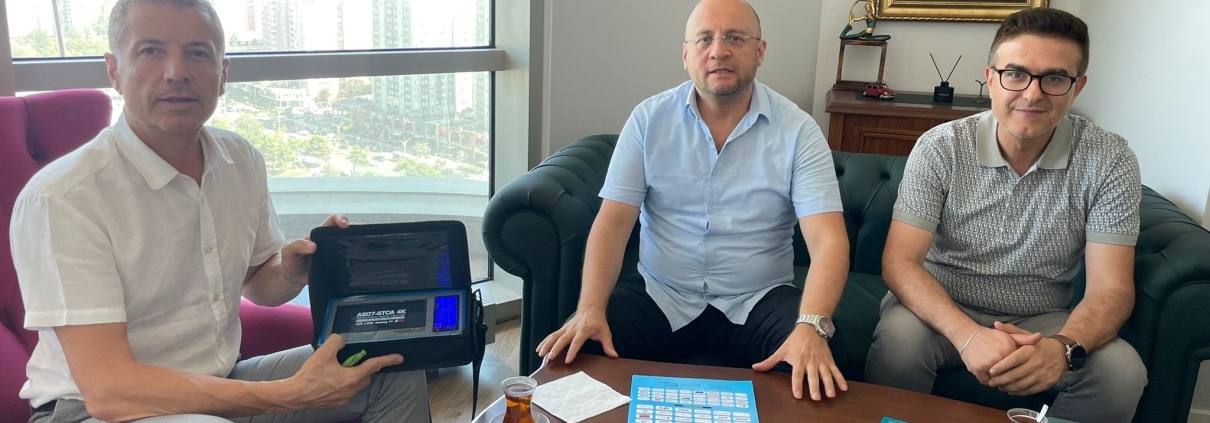
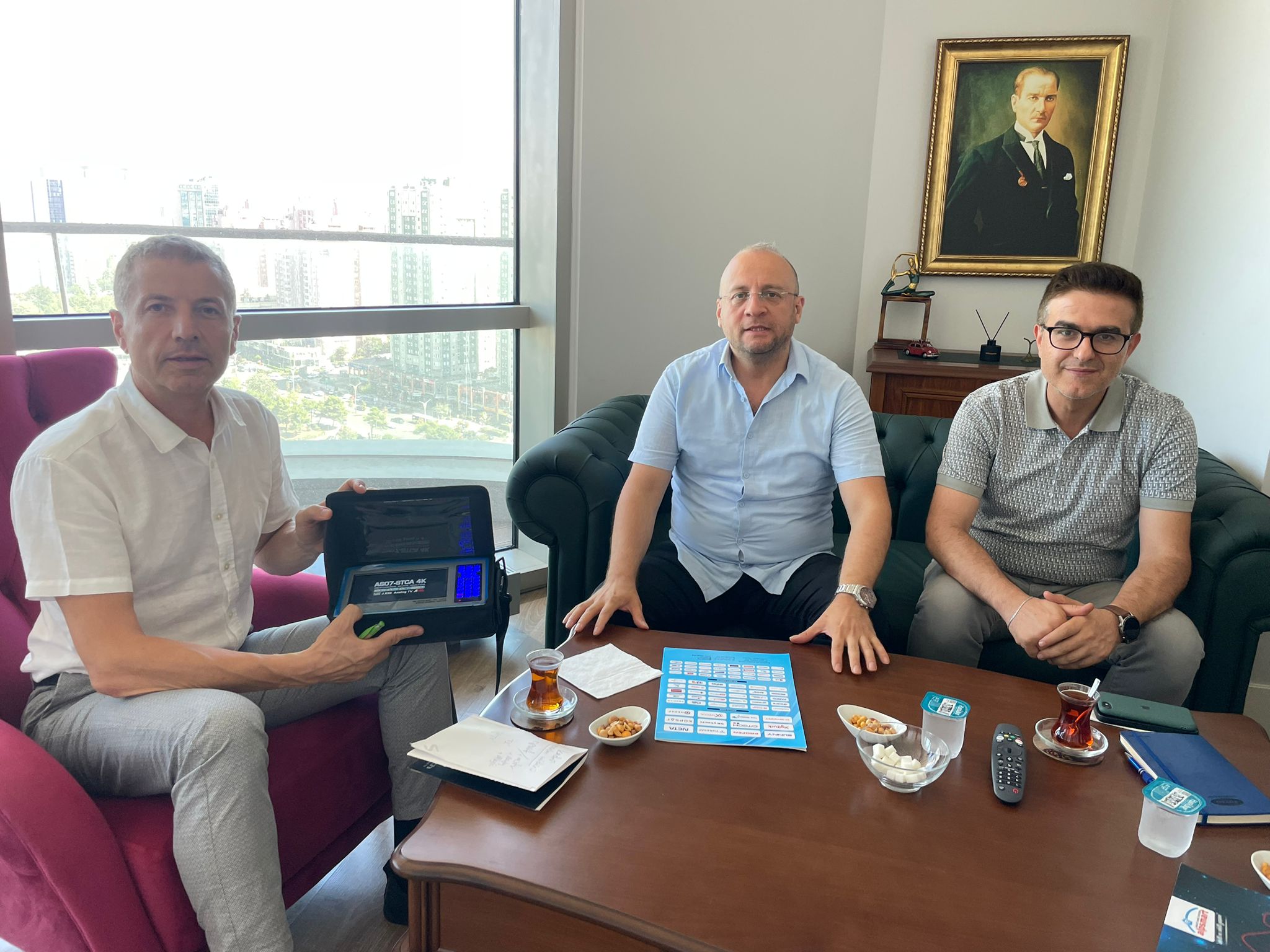
Founded in 2008 with manufacturing and R&D activities, Alpsat Electronic is our esteemed corporate member that offers smart solutions in professional satellite, TV box, security, and broadcast distribution systems, serving both domestically and internationally with 15 years of experience. Alpsat General Manager Mr. İlker Özgencil and Brand Manager Mr. Kadri Karaböcek visited TUYAD President Hayrettin Özaydın at the Ataşehir office.
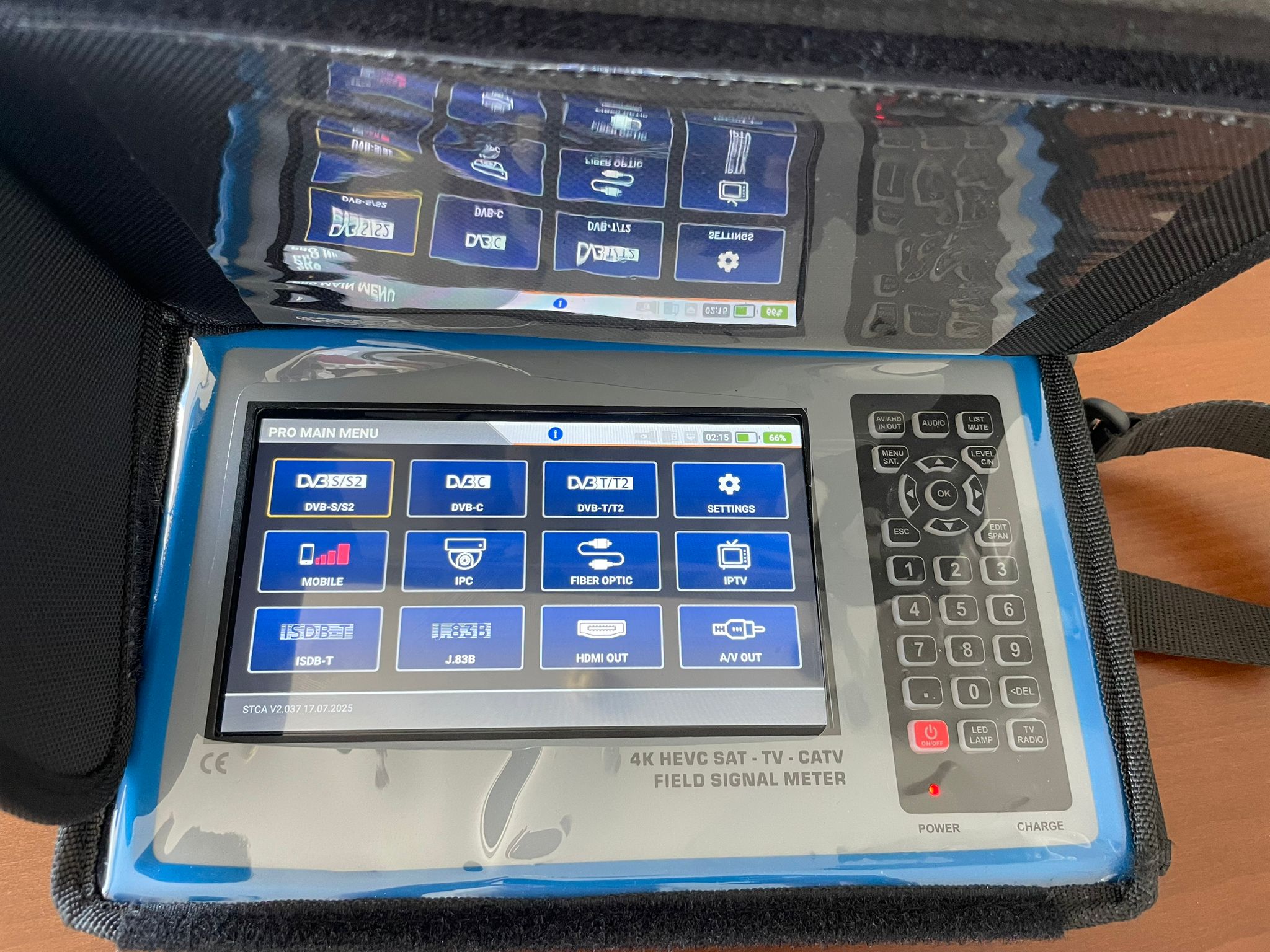
We had the opportunity to examine their new technological product, the AS07STCAO-PRO model TV-SAT measurement device, which, in addition to its features, includes IP STREAM TEST, CCTV IP CAMERA TEST, and fiber optic power measurement, making it unique in its class worldwide. Information was also exchanged on the latest developments in the transition to DVBT2 broadcasting in our country, sector-specific government supports, and rapid technological advancements.
We extend our regards to Mr. Özgencil and Mr. Karaböcek for their visit.

Those Who Leave a Mark in Space Have a Voice on Earth
Today, space technologies have gone beyond being merely a field of scientific advancement. Especially, satellite activities carried out in low Earth orbit have become a strategic factor influencing global power dynamics. This field now determines not only a nation’s technological capabilities but also its political and economic influence on the international stage.
Low Earth orbit satellites play critical roles across a wide range of sectors, from communications and defense to agriculture and finance. These satellites enable high-speed internet access even in the most remote corners of the world, enhance the mobility of military units, and provide vital data within minutes during disaster management processes. In short, these technological elements in space have become a fundamental infrastructure for nearly all areas on Earth.
In Türkiye, TUYAD (Telecommunications Satellite and Broadcasting Business People Association) has been representing the country’s leading institutions and their work in satellite technologies for the past 26 years. The core motivation behind these developments is clear: those who control information and communication possess global power. Thus, each satellite launched into space represents not only a nation’s technological level but also its global vision and ambition. Every state that strengthens its presence in space also strengthens its position on Earth.
In recent years, many countries—most notably the USA, China, and Russia—have made significant investments in low Earth orbit satellites. Rising nations like Türkiye are also moving toward taking an active role in this competition. In line with this awareness and strategic importance, KÜPSAT Inc. was established and has been working since 2023 on the design, development, and production of small and cube satellites. These efforts to develop satellites for communication, observation, and defense aim to enhance Türkiye’s independent operational capabilities in space.
At this point, the key issue is not just launching satellites, but also having the capacity to manufacture, manage, and, when necessary, defend them. With over 25 years of consultancy experience, Hedef Koç Consultancy continues its successful contributions to the structuring and development of the telecommunications, satellite, and space sectors in Türkiye. Every step taken in low orbit ultimately transforms into a move that affects strategic balances on Earth in the long run.
Today, we can clearly state this fact: space studies are no longer prestige projects for nations but have become matters of national security and economic independence. The phrase “Those who leave a mark in space have a voice on Earth” is the most concise summary of this process.
It is evident that in the coming years, the countries investing in space will assume more decisive roles not only in the scientific community but also in global politics. Therefore, low Earth orbit satellite technologies should be seen as one of the key tools to have a say in the future world.
Dr. Clinical Psychologist Mert Özaydın


War is one of humanity’s greatest tragedies; it leaves behind nothing but destruction, tears, and loss. Yet the world is vast and colorful enough for us to live together in harmony despite our differences. Peace is not merely the absence of weapons, but the presence of mutual understanding, respect, and love. A world where dialogue replaces conflict and tolerance overcomes hatred is possible. For every individual and every society, defending peace is the most powerful way to leave a more livable world for future generations. SAY NO TO WAR,


With advancing technology, the ways to access information, entertainment, and cultural content have diversified. The increased use of the internet has also led to a rise in copyright infringements and illegal broadcasting activities. Correctly defining the concepts of legal and illegal broadcasting is crucial for individuals to understand their legal responsibilities and for fostering cultural and ethical awareness in society.
Legal broadcasting refers to the distribution of a work or content with the approval of the creator, producer, or legal rights holder, in compliance with copyright laws. In such broadcasts, the rights of both the content creator and the distributing organization are protected.
Legal broadcasts are carried out with the approval of the content’s copyright holder, including its distribution, sale, and sharing, all in accordance with legal regulations. Legal broadcasting prevents unauthorized reproduction or copying. These broadcasts may be offered for a fee depending on the content owner’s sales and marketing strategy, or they may be available for free on certain platforms, provided they are shared with the copyright holder’s consent.
Illegal broadcasting, on the other hand, is the distribution of content without the permission of the legal rights holder and in violation of legal regulations. Such broadcasts constitute copyright infringement and cause financial harm to content producers while also subjecting users to legal liabilities and criminal penalties.
Illegal broadcasts are shared without obtaining the approval of the legal rights holder. Even if revenue is generated from such broadcasts, the copyright owner does not receive any payment related to the broadcasting or publishing rights. These contents are typically distributed through illegal websites, broadcasting platforms, or unauthorized software. Accessing such content without the owner’s consent may also expose users to legal consequences.
The distinction between legal and illegal broadcasting is also relevant for national television channels. Today, many national TV channels offer access to their content online. However, the method of access is critical. Live broadcasts, series, and programs accessed through the official websites or mobile applications of national TV channels are considered legal. On these platforms, the content is provided in accordance with the channel’s broadcasting rights and does not pose legal risks to users.
Platforms that record, share, or allow access to national channel broadcasts through unauthorized websites are considered illegal broadcasting sources.
In Turkey, legal and illegal broadcasting practices are primarily governed by the Law on Intellectual and Artistic Works No. 5846 (FSEK) and various other regulations. Copyright infringements, especially those carried out over the internet, are evaluated within the scope of the Law No. 5651 on the Regulation of Broadcasts via the Internet. Understanding the difference between legal and illegal broadcasting is essential for shaping responsible content consumption habits.
https://www.rtuk.gov.tr/Media/FM/Icerik/KamuSpotlari/83195-tuyad%20(1).rar
Dr. Uzman Psikolog Mert Özaydın

 LET 2021 PASS WITH HEALTH, PEACE, PEACE AND HAPPINESS FOR...December 31, 2020 - 2:58 pm
 Energy Consumption and Efficiency in Electronic DevicesMay 2, 2025 - 7:38 am
 ARABSAT VISITED TUYAD ASSOCIATION IN ISTANBUL OFFICEJune 7, 2021 - 8:04 am
 Türkiye’s Electronic Export Power in the European Ma...September 2, 2025 - 9:57 am
 HAPPY NEW YEARS!December 31, 2025 - 7:08 am
 TUYAD Continues Preparations for the 2026 Issues of Digital...December 25, 2025 - 9:47 amTUYAD PUBLISHES THE DIGITAL LIFE MAGAZINE 2025 YEAR-END...December 19, 2025 - 12:11 pm
 TUYAD IS PREPARING THE DIGITAL LIFE MAGAZINE 2025 YEAR-END...November 25, 2025 - 8:56 am